Where Can I View the Active Lava Flow?
There are many great opportunities to view the dramatic Kilauea Volcano’s active lava flow. Depending on the dynamics of the lava flow, you may be able to get close to a surface lava flow, watch the explosive ocean entry, or even see glowing cracks and smoke plumes from newly formed vents. Check the latest Kilauea volcano lava flow USGS official update, or call the Park at (808)985-6000. You can also view a map of the most current lava flow. Prefer to take a guided tour? Check out the Volcano Adventure Tours of the Big Island. The lava lakes in the Puʻu ʻŌʻō crater and Halemaʻumaʻu crater, as well as other views may be viewed on webcameras made available by the scientists at USGS Hawaiian Volcano Observatory. The active lava flow can usually be seen at one or more of the following locations:
1.) East Rift Zone - hike from the end of the Chain of Craters Road to view the lava’s ocean entry (viewed best after dusk)
2.) Kilauea Summit - gasses, a large smoke plume, and red glow can be seen inside the Halemaumau Crater - best viewed from the Crater Rim Drive (note: the southwest section of this road is closed due to hazards)
3.) Surface Flows are the most dramatic - the rivers of flowing lava are also the most difficult to hike to and often their location is unpredictable (see the lava update for surface flow news)
4.) The Kalapana viewing area is outside of Hawaiʻi Volcanoes National Park and is managed by Hawaiʻi County - there is no fee to enter the viewing area (the viewing area is open from 2:00 p.m. to 10:00 p.m. with the last vehicle allowed in at 8:00 p.m) Call 808-961-8093 for a recording of the Kalapana viewing conditions. You may also see mention of the Kalapana viewing conditions on the USGS page.
Lava conditions change quickly, make sure you get the latest lava update prior to visiting the park, or just stop by the visitor’s center (just inside the park main entrance) to ask the Park Rangers in-person about the lava viewing conditions.
Click on our Interactive Lava Flow Map
View Big Island Lava Flow Viewing in a larger map
If you are hiking to observe the active lava flow, we recommend that you wear comfortable socks and walking shoes or hiking boots. Year-round the weather varies on the volcano, so be prepared for all climates, hot, damp, and cold. Bring sunscreen and wear a hat. We also suggest bringing sweatshirts or a fleece jacket as well as a wind-breaker or raincoat or gore-tex jacket to layer on your clothes. Check out our Volcano Hiking Guide for more information and tips.
Although there are ample water fountains in the park, we suggest you bring water with you, especially if you will be hiking (3 liters minimum if you are hiking for several hours). Don’t forget your camera! If you plan to view the lava flows after dusk, remember to bring one flashlight per person. For more information on all of the great attractions at the Volcano Park, check out our main Hawaii Volcanoes National Park page.
From the Kilauea Visitor Center, follow Crater Rim Drive to the Chain of Craters Road intersection. Drive 20 miles to the turn-around at the end of the Chain of Craters Road and park along the mountain side of the roadway.
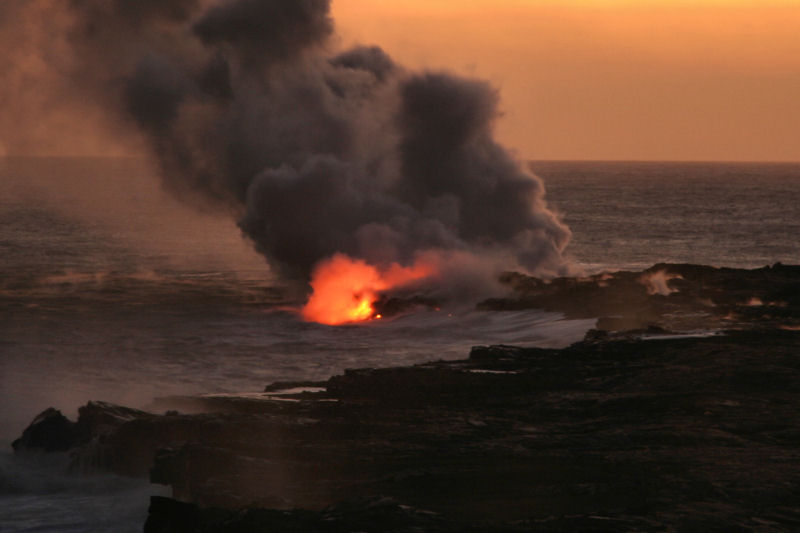
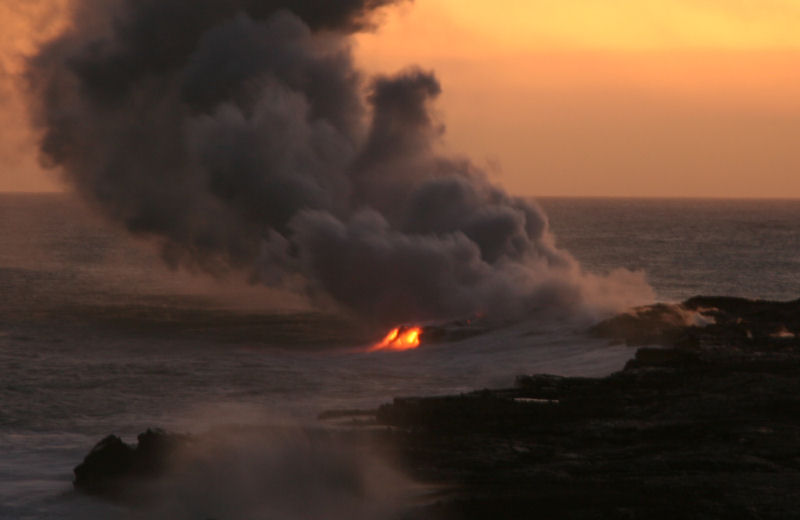
Rangers are on duty at the end of Chain of Craters Road from late morning until evening. Sometimes, lava may be seen in the distance flowing down the mountainside. Often, a red glow may be visible on the slopes after dark. A steam plume is visible when lava enters the ocean; it glows orange and red after sunset.
Kilauea is a dynamic volcano. Lava viewing conditions change daily. Talk to the ranger in the Kilauea Visitor Center when you arrive for current information.
August 3rd, 2011 Lava Flow Update
On August 3rd, 2011, the longtime erupting Pu’u O’o crater of the Kilauea Volcano collapsed. Soon thereafter, at 2:20 p.m., lava broke out at the base of the west flank of the Pu`u `Ō `ō cone and began flowing in dramatic fashion. This “surface flow” of lava began moving at a rapid pace down Kīlauea’s south flank. The weaker northwest arm was pushing into the kipuka forest, while the higher volume, larger south arm of the lava flow had advanced downslope.
The lava flow is entirely within Hawai‘i Volcanoes National Park, and poses no hazard to residents outside the park at this time. The east rift zone activity has not caused significant changes within Kīlauea’s summit vent in Halema‘uma‘u Crater.
Volcanoes National Park official webcam images of Pu`u `Ō `ō and surrounding area, including the site of the current activity, can be accessed on the official website.
A multi-agency response team continues to monitor eruption and fire conditions and will force closure of certain portions of the Volcanoes National Park for safety reasons. Check out the official website for the latest Park Closure information. For more information about access and road closures, Park visitors should call 808-985- 6011 or by email.
Related Topics:
- Visit our main Hawaii Volcano page for all the park attractions
- Take a Virtual Tour of the active Kilauea lava flow.
- View our Volcano Videos to see lava flowing at the Kilauea volcano.
Volcano Tours on the island of Hawai’i - CLICK HERE!
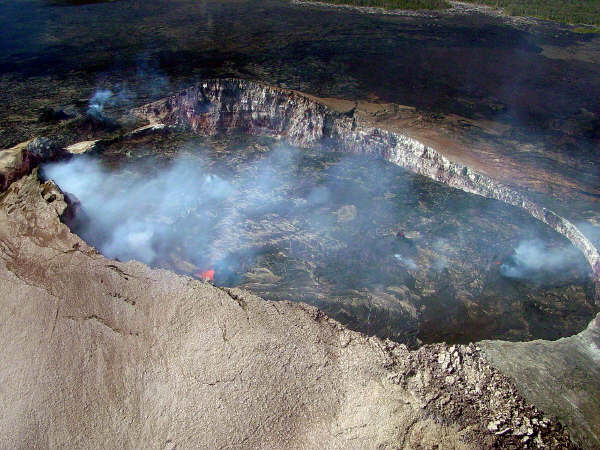 Pu’u O’o Crater Viewed from Helicopter |
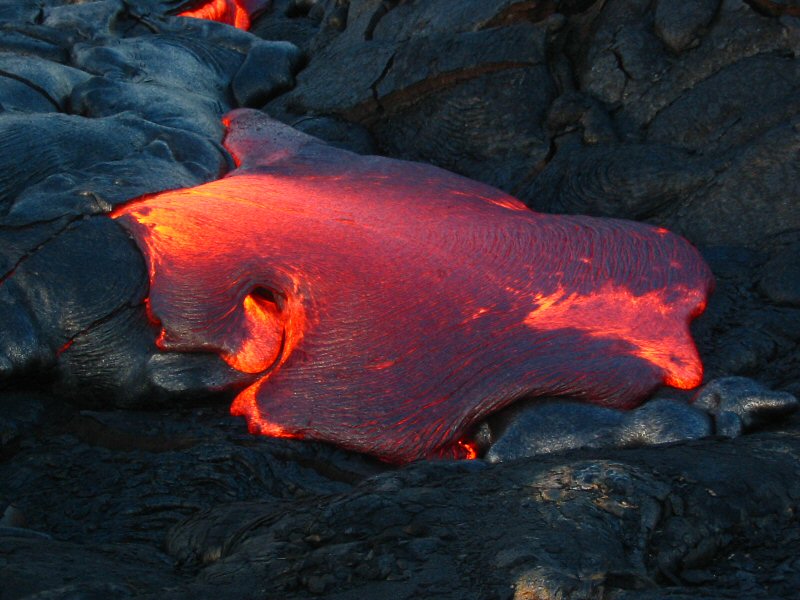 Surface lava flow hardening |
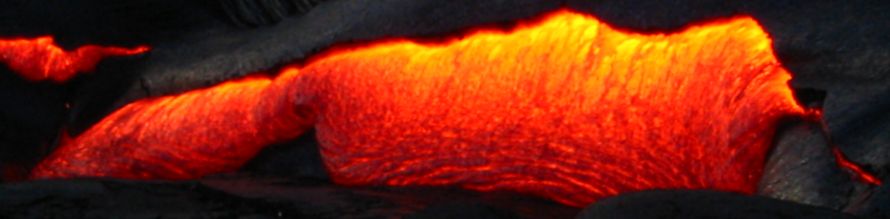
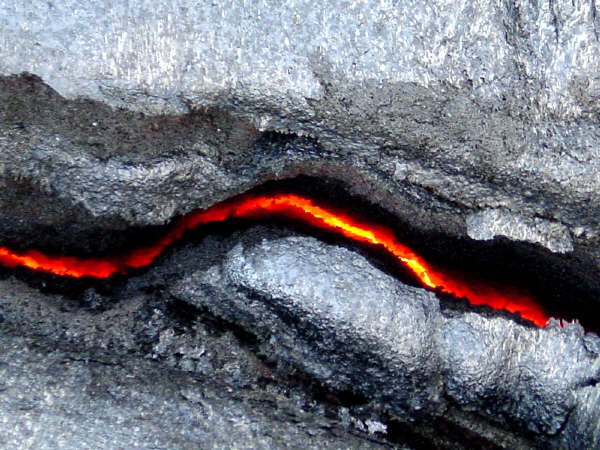 Hot lava beneath a crack |
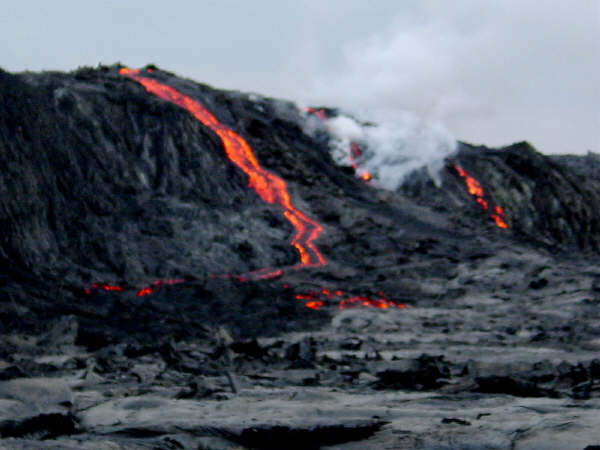 Kilauea Surface Lava Flow |
Thanks to Ron Tencati for his photo contributions
Planning on hiking into the East Rift Zone in search for a surface flow or ocean entry? Make sure you are dressed properly and are equipped with the right gear. We can’t overemphasize being prepared for the hike - too many times we see tourists with sandals and flip flops - not appropriate or safe for the rough lava surfaces. If you plan on staying past sunset (and we highly recommend this), each person should carry their own flashlight for the walk back.
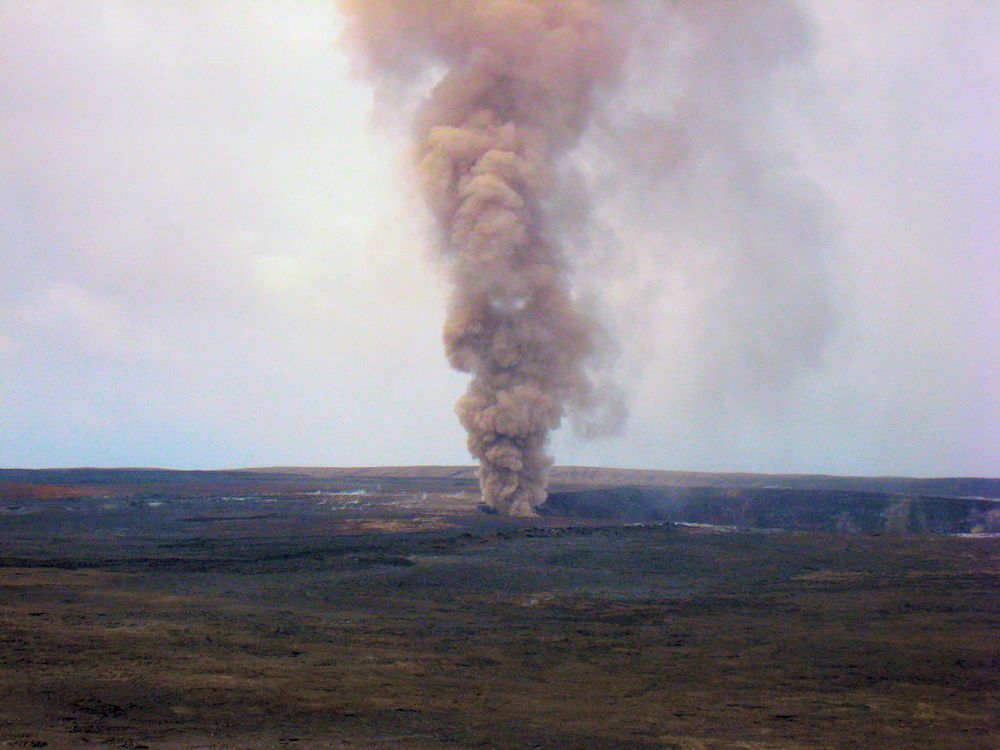
Smoke Plume, Halemaumau Crater, Kilauea
August 2008 Vog Update
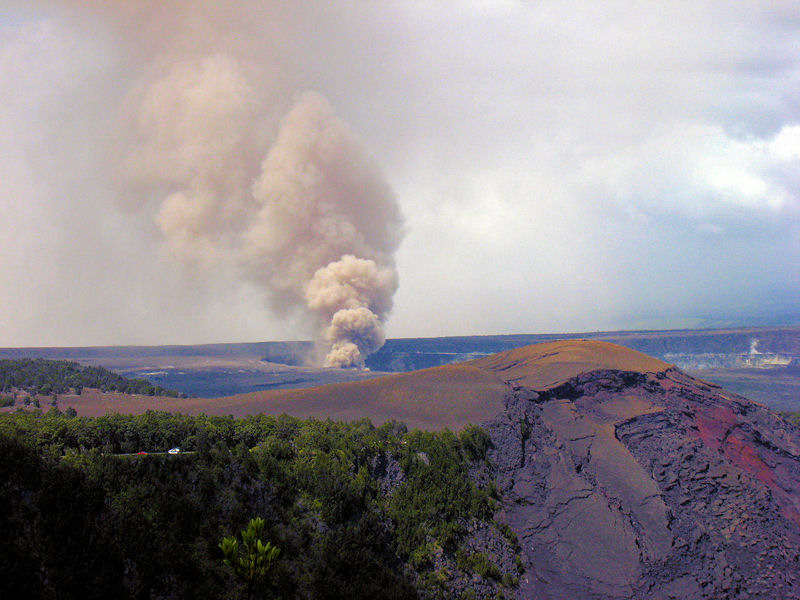
Visitor Alert - Kilauea is currently emitting elevated levels of sulphur dioxide gas and an ash-laden fume cloud from a new vent within Halema`uma`u crater. Closure of certain areas of the park may become necessary during times when winds vary from the normal northeast tradewind pattern. Trades generally blow the plume (cloud of gasses and ash coming out of the vent) away from visitor areas. Park personnel and scientists from the Hawaiian Volcano Observatory are monitoring the situation closely. check out the latest information on Park Closures. Also, check out the Volcanoes National Park interactive map showing park closures on Crater Rim Drive.
March 2008 Lava Flow Update
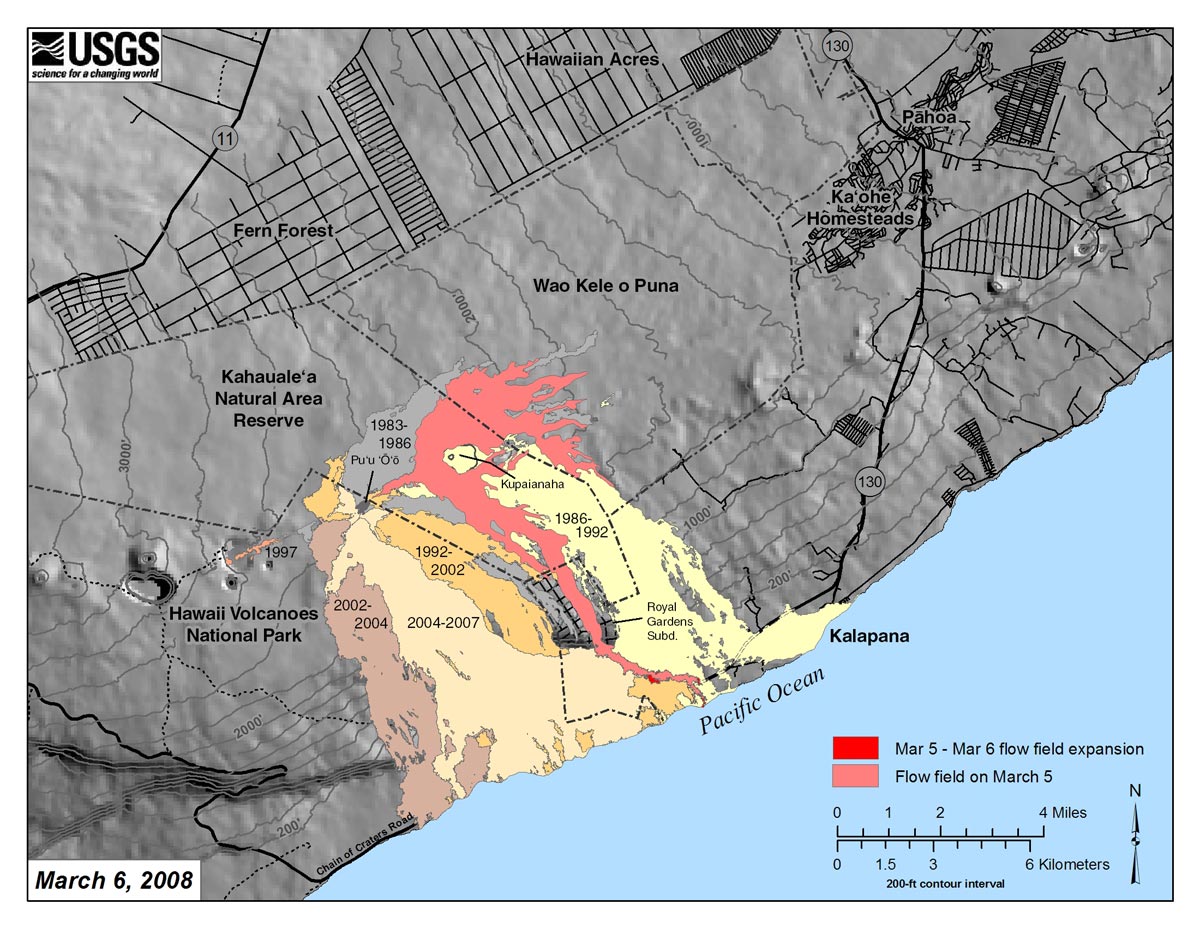
In June of 2007, the Kilauea lava flow changed its direction, flowing further east and through more remote areas of the Big Island. This change unfortunately prevented the general public from viewing the geological phenomenon. Prior to this date, the lava flow was consistently viewable after a short hike from the end of the Chain of Craters Road. Since June 2007, the lava flow threatened to overrun the Royal Gardens housing subdivision, south of Pahoa, but for the most part the lava flow remained hidden from public view. But, as of March 9th, 2008, the dynamic conditions changed yet again as the lava flow made a turn and presented a wonderful opportunity for tourists and locals alike to view the active lava flow’s ocean entry - where the rivers of lava flow into the ocean resulting in plumes of steam, hissing of super-hot lava mixing with the roaring ocean waves. View a map of the lava flow as of March 6th, 2008.
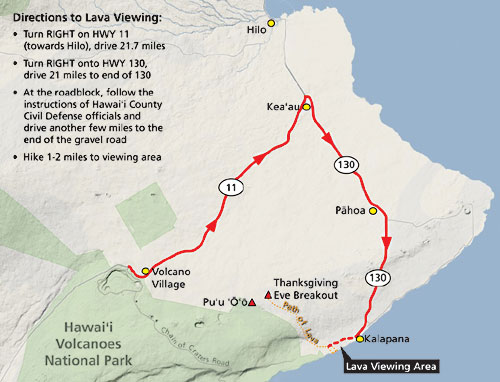
You can view the lava flow by driving to the end of Highway 130 (south of Pahoa), then follow the newly installed dirt road to the end. Daily viewing will be from 2 p.m. to 10 p.m., with the last car allowed in at 8 p.m. Sightseers can hike a half mile over rough ground with no shade from the road to the ocean. There will be portable toilets and emergency water supplies. See excerpt of article posted on our volcano blog.
For up to date lava flow information, visit the official park website.
View driving map for directions from the Volcanoes National Park to the lava flow area (not located on park property).
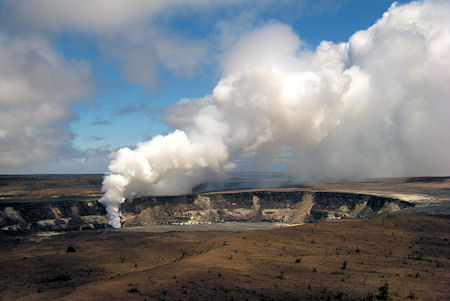
Halemaumau Crater, July 2008
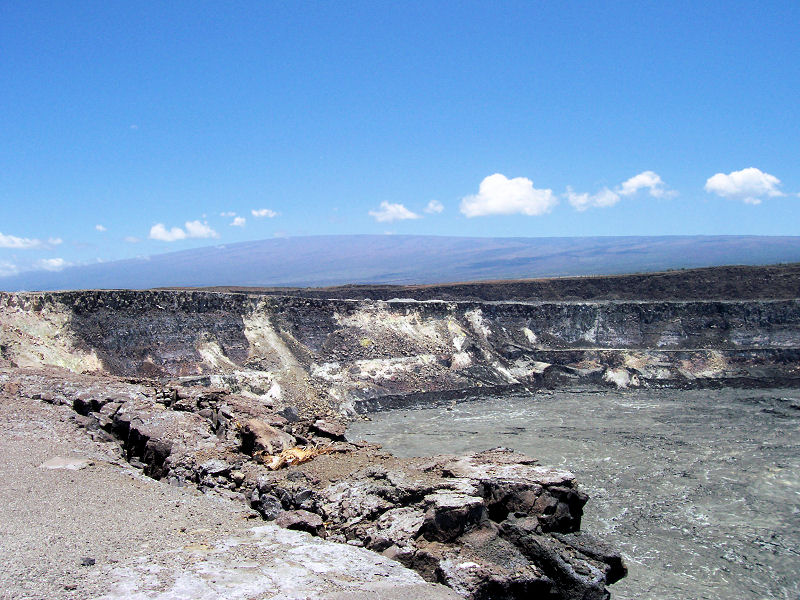
Halemau’Uma’u Crater Vent (2008)
A swarm of earthquakes and formation of a gas-emitting vent the morning of March 12, 2008, signaled the start of something new at the summit of Kilauea. Three “throat-clearing” explosions has given this new activity the distinction of being the first explosive eruption in Halema`uma`u Crater since 1924 and the first lava erupted from the crater since 1982.
 |
 |
The new explosion pit continues to vigorously vent gas and ash, with the plume alternating between brown (ash-rich) and white (ash-poor). You may not have an opportunity to view the lava flow because of changing conditions, poor weather, or you don’t have the time - however, you can easily view the smoke plume at the Halema’uma’u Crater and gain an appreciation for the power of Pele and the Volcano. Visitors may view the new vent within Halema‘uma‘u crater and the plume from the overlook at Jaggar Museum. Other overlooks with views include: Steam Vents, Kilauea Overlook, Kilauea Iki Overlook, and Volcano House hotel.
Historic Photos of the Lava Flow
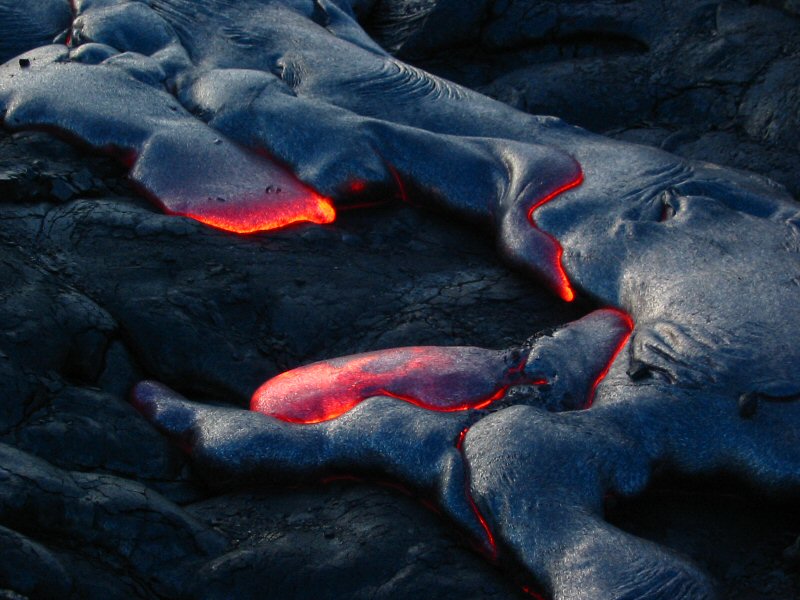
The below Photos pre-date the current lava flow (pre-2007) and although these views are currently unavailable, they show historic photos of what was previously viewable (and perhaps again in the future…)
 |
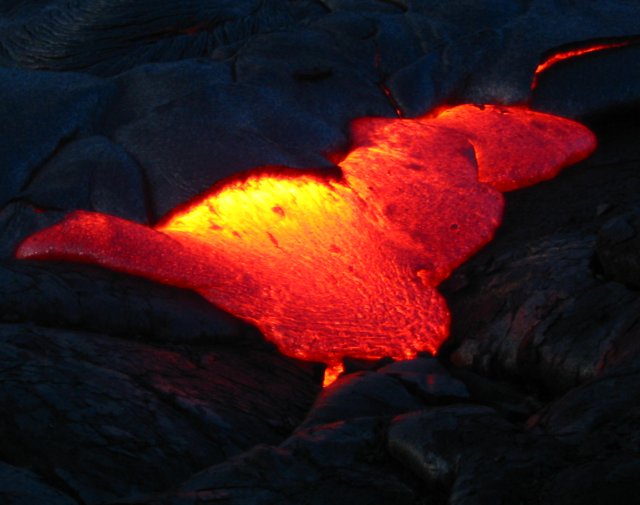 |
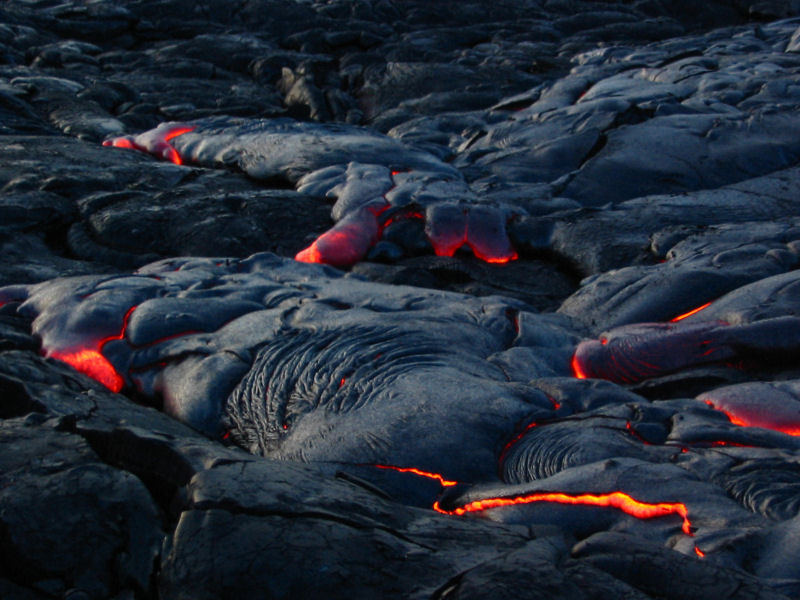 |
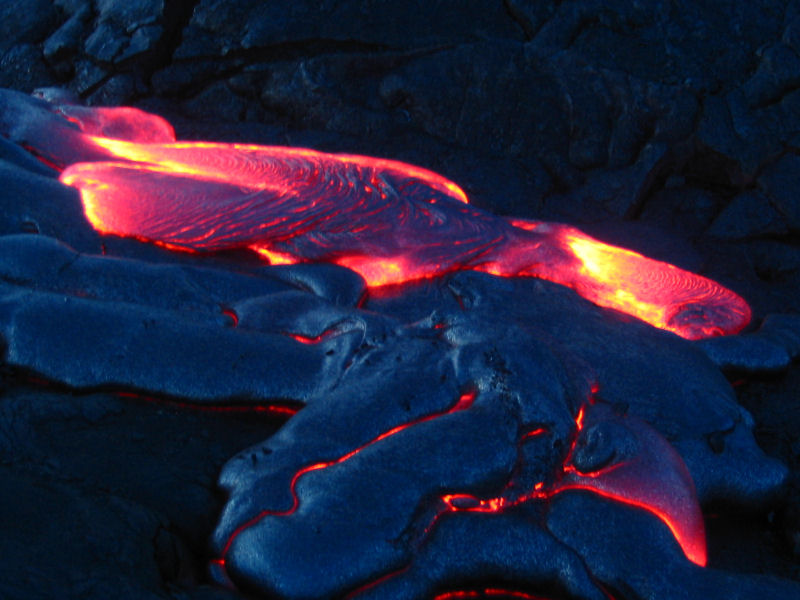 |
Pre-2007 Lava Flow - Historical Perspective
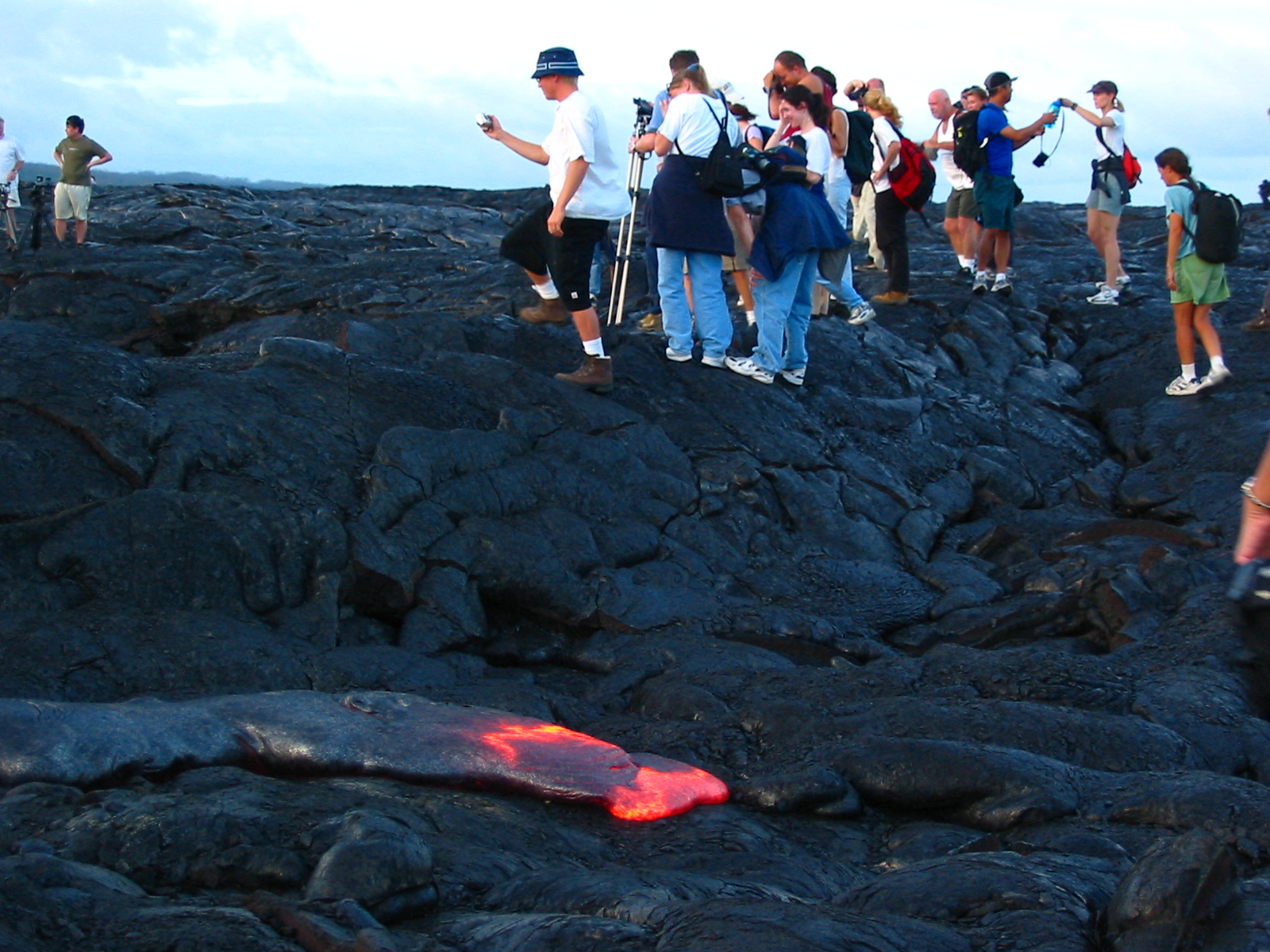
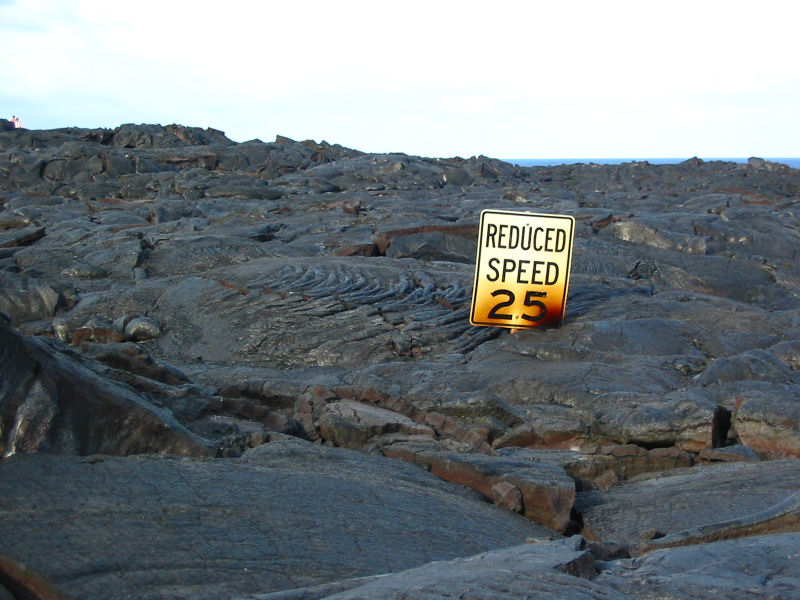
Prior to June, 2007, lava entered the ocean at the end of Chain of Craters road in Volcano National Park. We used to drive to the end of the road, park, then follow the long line of hikers walking across the dried lava beds to get a closer view point of the lava flow.
We normally would pack a dinner and arrive at the lava flow area prior to sunset. Here we would picnic and get in position with our cameras prior to dusk. We recommend you find out when official sunset is and add time backwards from that point to give you the time to hike. It is an awe inspiring scene to see the transition to dusk and then night, as the red lava glows brighter in the dark. Check out our latest Lava Hike Blog entry.
 |
 |
 |
 |
After a day of outdoor activities and hiking, spend the night at the historic Volcano House Hotel, or a variety of other hotels close by. Being more than 90-miles away, it is often more convenient to spend the night at a hotel near the Volcano or in Hilo when visiting the Hawaii Volcanoes National Park.
Visit our main Hawaii Volcano Park page for more details and photos of the rest of the national park attractions, sights, hiking, and camping.



 Hike
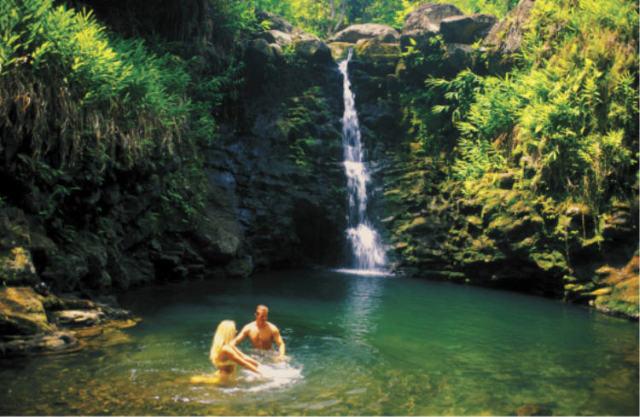
with an expert guide in Hawai'i Volcanoes National Park, in the rain
forests, deep in remote valleys, and explore hidden waterfalls
Hike
with an expert guide in Hawai'i Volcanoes National Park, in the rain
forests, deep in remote valleys, and explore hidden waterfalls
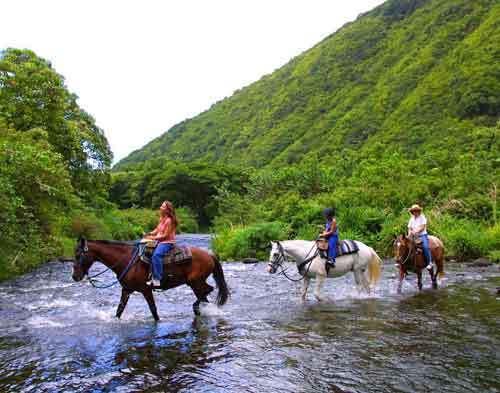 Enjoy
a picturesque Hawaiian horseback ride through the Valley of the
Kings, a lush tropical paradise of jungle trails, waterfalls, and spiritual sites.
Enjoy
a picturesque Hawaiian horseback ride through the Valley of the
Kings, a lush tropical paradise of jungle trails, waterfalls, and spiritual sites.