 |
|
|
|
|
|
|
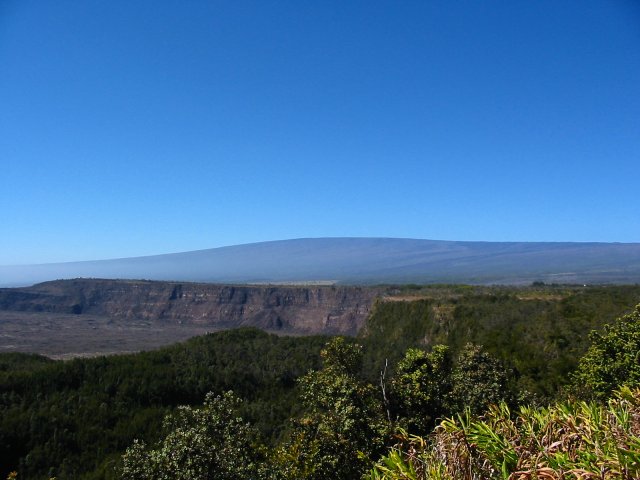
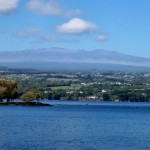
Mauna Loa in background
Hawai’i Volcanoes National Park, established in 1916, displays the results of 70 million years of volcanism, migration, and evolution — processes that thrust a bare land from the sea and clothed it with complex and unique ecosystems and a distinct human culture.
The park encompasses diverse environments that range from sea level to the summit of the earth’s most massive volcano, Mauna Loa at 13,677 feet. Kilauea, the world’s most active volcano, offers scientists insights on the birth of the Hawaiian Islands and visitors views of dramatic volcanic landscapes. The terrain ranges from isolated tropical beaches to snowy mountain summits to lush rain forest alive with rare flora and fauna. Want more information? Check out the best Big Island Adventure Guide.
The park is located at 4,000 feet, so be prepared for rain and temperatures ranging from 30 degrees to 75 degrees. The weather down at the ocean can be hot, dry, and windy. Entry fees: pedestrians and bicyclists are $5, vehicles are $10 for seven days - or $25 for an annual tri-park pass that also includes access to Pu’uhonaunau o HonaunauNational Historic Park in Kona and Haleakala National Park on Maui. There are more than 150 miles of trails in the park - this park is best discovered on foot. For more information on hiking at the park, check out our Volcano Hiking Guide. Prefer to take a guided tour? Check out the Volcano Adventure Tours of the Big Island.
Sights, Scenic Points, and Short Hikes
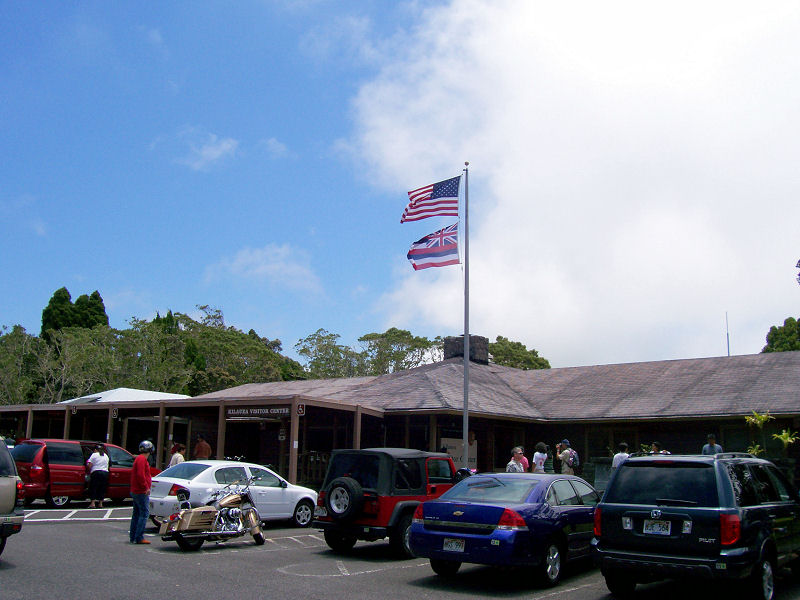
Volcanoes Park Visitor's Center
Volcano Visitor’s Center - You should start your adventure here. There are various exhibits and information about the park. Stop in for a quick update on the current lava flow and where the best place is to view the lava. Also, if you have the time, check out the informative short movie about the Volcanoes National Park. A large picnic area is adjacent the center. There are also Bathrooms and a water fountain here. The Park is open 24 hours a day year round. Kilauea Visitor Center is open daily from 7:45 a.m. to 5:00 p.m.. Here, you will receive the latest information on trails, ranger-led activities, road conditions, and safety precautions.
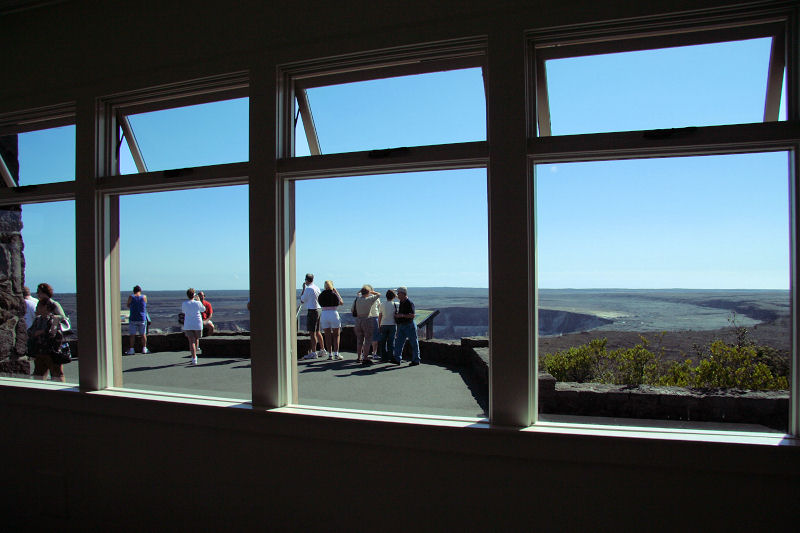
View from Jaggar Museum
Crater Rim Drive - If you have only one to three hours, explore the summit of Kilauea volcano via Crater Rim Drive; an 11-mile road that encircles the summit caldera, passes through desert, lush tropical rain forest, traverses the caldera floor, and provides access to well-marked scenic stops and short walks. Check out our Crater Rim Drive section for more information.
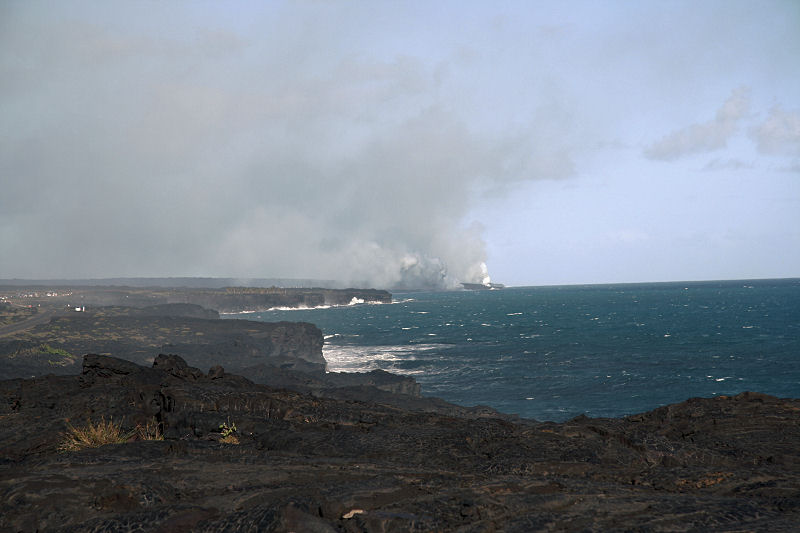
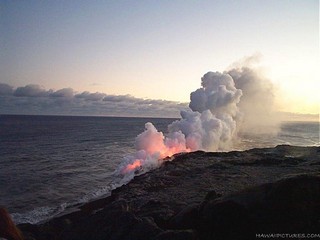
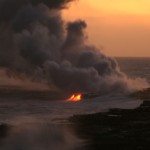
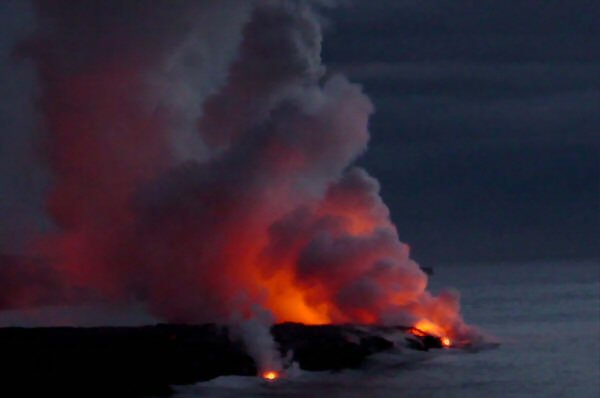
Steam from lava ocean entry
Chain of Craters Road - If you have four to five hours, you may also explore the East Rift and coastal a rea of the Park via Chain of Craters Road. This road descends 3,700 feet in 20 miles and ends where a 2003 lava flow crossed the road. Depending on changing volcanic activity, there may be opportunities for viewing active lava flows from the end of the road. No food, water, or fuel is available along the 40-mile long Chain of Craters Road. Check out our Chain of Craters Road section for more information.
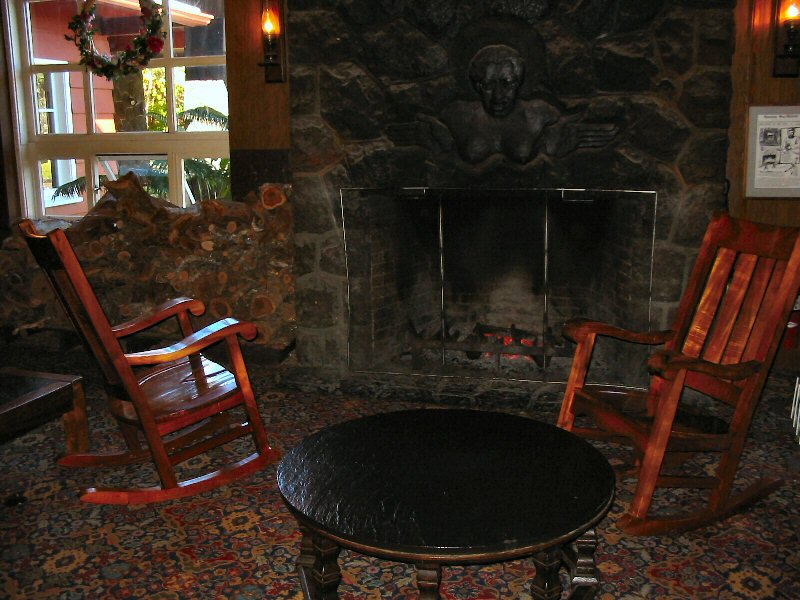
Volcano House, Hawaii Volcanoes National Park
Volcano House - This quaint, historic hotel is located right on the park grounds, across the road from the Visitor’s Center and right at the edge of the Kilauea Caldera. Additionally there is a restaurant and souvenir store. The real reason to stop here is to see the spectacular view of the volcano crater from the observation deck in the back. Take a Virtual Tour of Kilauea Crater as seen from the Volcano House observation deck. Check out the latest rates for the Volcano House Hotel.
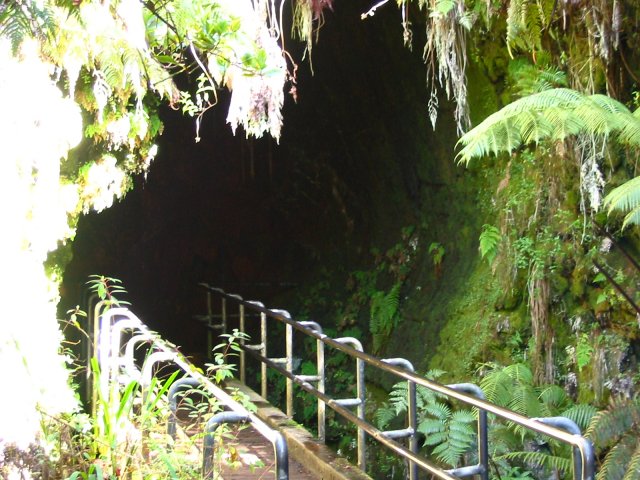
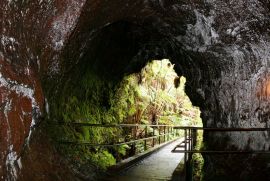
Thurston Lava Tube Entrance
Thurston Lava Tube - The lava tube was formed about 350-500 years ago, during an eruption on the east side of Kilauea’s summit. The 20-minute walk at Thurston Lava Tube will give you a close-up look at a Hawaiian rainforest and the magnificent lava tube. Be careful, the trail can be slippery when wet. When the eruption stopped the lava drained from the tube. The trail within the tube is 400 feet long. There are bathrooms and a water fountain here. Bring your camera.
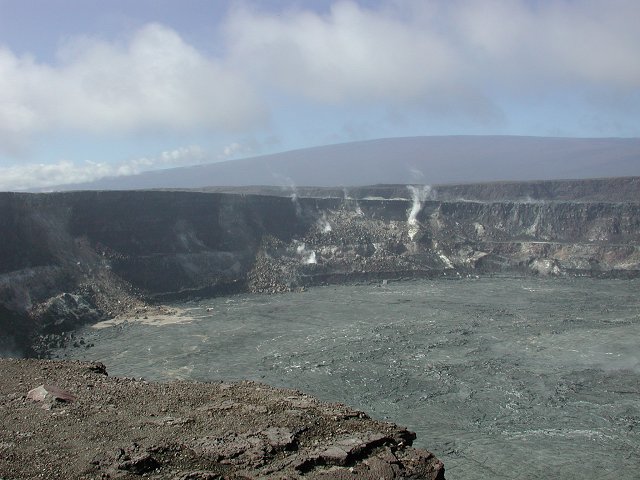
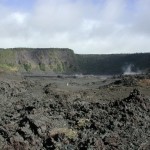
Halema'uma'u Crater
Halema’uma’u Overlook - On the southern part of Crater Rim Drive, you will find this fantastic overlook. The short walk from the road leads to the edge of the crater itself. With good weather, you will have a grand view of Mauna Loa in the background with a panoramic view of the Halemaumau Crater in front and below you. Take a Virtual Tour of Halema’uma’u Crater. This active crater still spews sulphur and steam as magma courses through lava tubes to feed the current eruption at Pu’u O’o.
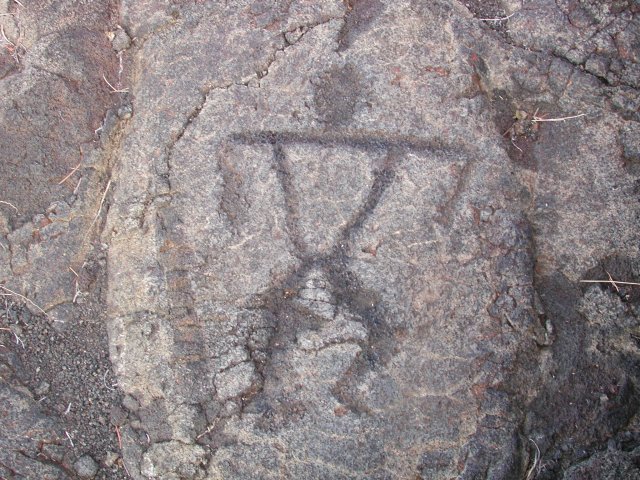
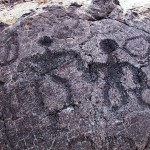
Petroglyph at Pu'u Loa
Pu’u Loa Petroglyphs - Petroglyphs are ancient Hawaiian lava rock carvings. This trail starts off of the Chain of Craters Road and leads you to the petroglyph fields. This coastal trail traverses older lava flows to one of Hawai’i's most extensive petroglyph fields. Easy to moderate 2 miles roudtrip hike, 1.5 hours total. Petroglyphs are fragile. Stay on the boardwalk - walking on the lava surface will fragment petroglyphs and destroy them. Bring water, wear sunglasses and a hat. Items of interest: petroglyphs, pahoehoe lava. Check out our detailed petroglyph section.
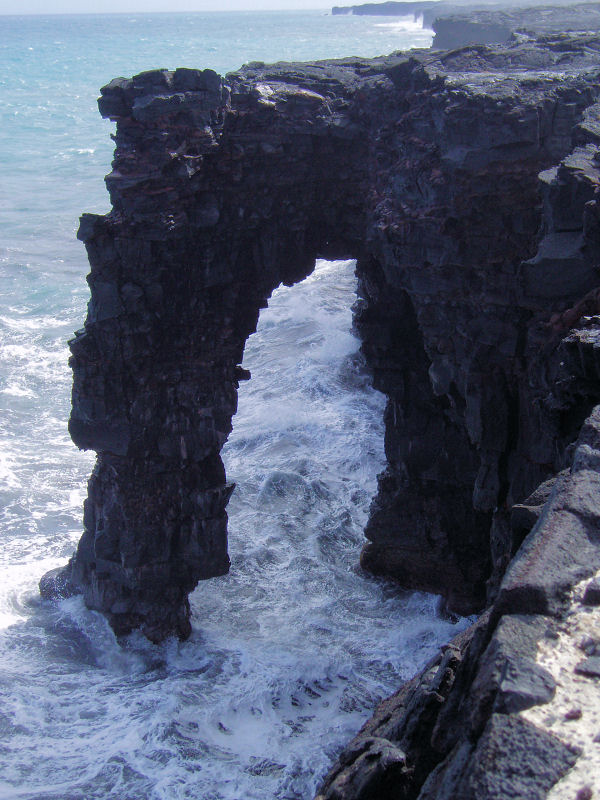
Holei Sea Arch, Chain of Craters Road
Holei Sea Arch - The dramatic Holei Sea Arch is found along Chain of Craters Road. Watch for sign on the side of the road as you parallel the ocean. Park at the sign and take the short 5 minute hike to the edge of the lava cliffs. You will be able to see the dramatic natural sea arch that was formed by ocean waves eroding the lava wall. If you hike up or down the coast at the cliff’s edge, below you will also see black sand beaches that have been formed by the violent crashing waves.

Lava Flow, Volcanoes National Park
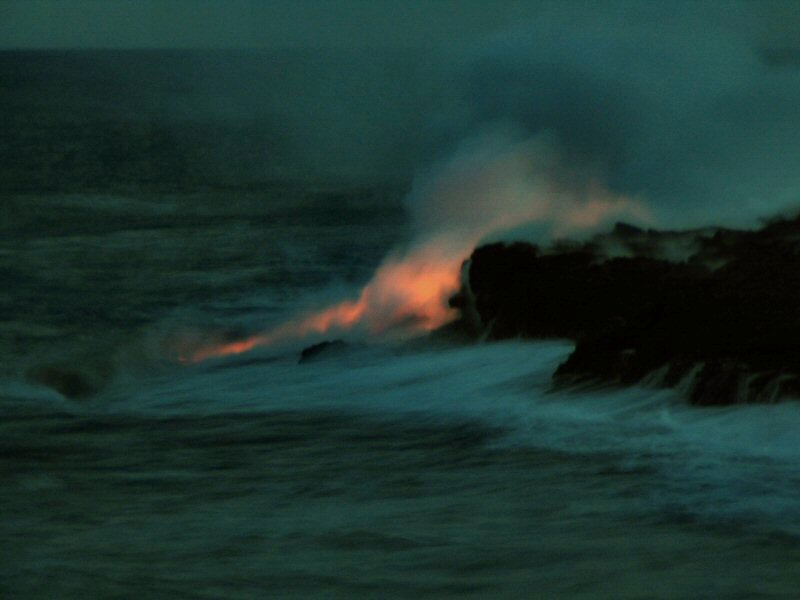
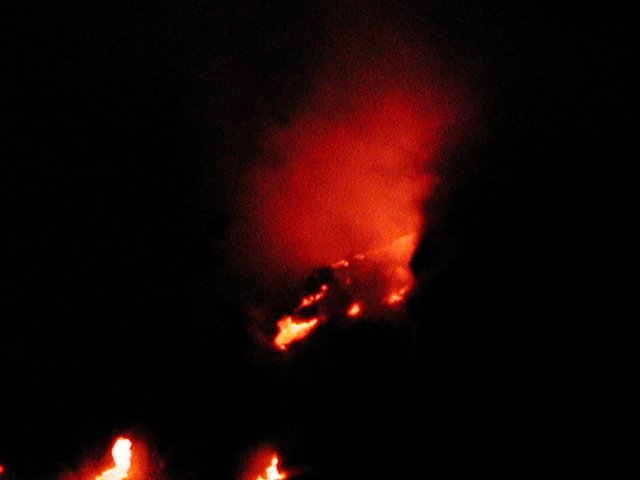
Active Lava Flow - Call the park, check in at the visitor’s center, or check online to find out the latest status of the lava flow. The status changes daily and you will want the most current information to plan your lava viewing. Oftentimes there is a surface flow, which can be seen easily, especially at night. But, much of the time, the lava flow can only be observed from a short distance as it enters the ocean. This ocean entry is best viewed after dark, so that you can see the glowing lava. How should you dress and what do you need to bring with you to the Active Lava Flow? Check out our Volcano Hiking section for all the details. Check out our new lava flow section with information and photos of the Kilauea Volcano lava flow. For more information and the latest lava flow update, call the Park at (808)985-6000. Take a Virtual Tour of the active Kilauea lava flow.
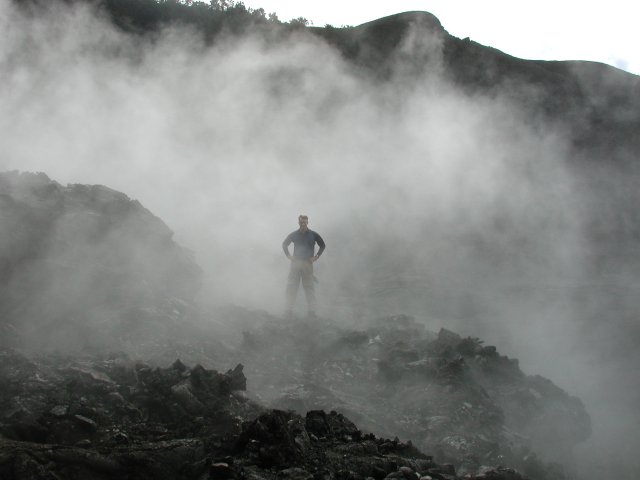
Steam Vents at Kilauea Iki
Steam Vents - The steam vents are located on the North side of Crater Rim Drive. At the Volcano Steam Vents you can take a Steam Bath right at the outside. Just stand right next to the railing of the steam vent, and the air will blow the steam all around you. You can see the thick steam billowing out of the ground here. Short hikes around the perimeter here will lead to other, larger steam vents. There are also spectacular steam vents in the crater on the Kilauea Iki Trail.

Kilauea Guided Tour
Volcano Eco Tour Adventure - during this guided Tour of the Hawaii Volcanoes National Park, you’ll see a splendid native rainforest, visit a lava tube, discover remarkable volcanic formations, and experience a diverse change in geography and climate. Through detailed geologic and natural history interpretation, small walks, and driving, you’ll explore and learn about the world’s most active volcano. A picnic lunch is served en route and depending on what the current volcanic activity is you’ll make a trip down the Chain of Craters road in the park or leave the park early to head down to Kalapana, searching for some current lava flow.
Longer Hikes and Camping
Stay on marked trails. Avoid cliffs, earth cracks, and steam vents. Wear sturdy closed-toe walking shoes. Carry at least one quart of water per person. Wear sunscreen, a hat, and sunglasses. These are two of our favorite hikes in the park. Each has several forks at which you may choose to vary your course. Consult park maps for more details. Are you ready? Read our Hawaii Hiking Tips.
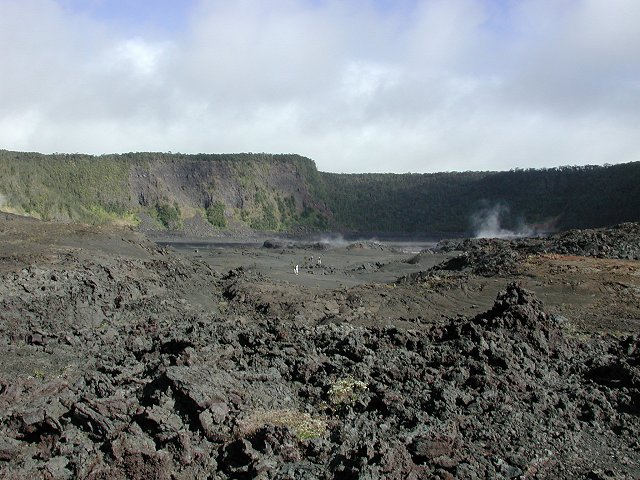
Kilauea Iki Crater Trail
Kilauea Iki Trail - This is one of our favorite hikes. It is a moderate 4 mile hike and should take about 2-3 hours. The trail begins at the Kilauea Iki Overlook parking lot. The Kilauea Iki trail descends 400 feet through tropical rainforest, crosses the crater floor, pass the Pu’u Pua’i cinder cone, and returns up and back via the crater’s rim. Scenic views throughout. Bring water and you camera. As always, wear comfortable socks and walking shoes / hiking boots with good support. Items of interest: rain forest, birds, insects, 1959 lava lake, steam vents, cinder and spatter cone. The Pu’u Pua’i Overlook provides a fine look into Kilauea Iki Crater. Check out more information and photos on the Kilauea Iki Trail.
Hilina Pali Trail - This trail starts at the Hilina Pali Overlook. The trail switchbacks steeply down to the coast to Kaaha Point, about 7.5 miles round trip. At the end there is a simple shelter with a water catchment system (not purified). The trail on down the pali is a vertical affair requiring good footwear. You will find in places that the trail is loosely packed lava rocks so be prepared for a little skiing. Uphill is a different matter and it is easy to choose your footing such that no sliding occurs. It will tax your endurance a little though. The trail starts gently in the forest and then becomes switchback trail that takes you to the bench floor of the pali some 1,500 feet below. It is then another gradual 780 feet to the coast. The trail branches several times, you will want to continue (follow signs) to the “Ka’aha Shelter.” This shelter is at the end of the trail at the lava pools on the coast. You can see palm trees thriving along the pools. If you have room, we suggest you pack a mask and snorkel. You can snorkel and see lots of sea life in the protected waters of the tidal pools, be careful not to venture to the rough open ocean! Bring lots of water. Protect yourself from the sun, as the trail snakes on the dried lava beds, there is no cover from the sun. Items of interest: lava beds, lava pools, steam vents.
From the Halini Pali Overlook, by bearing left (east) at the trail intersection, the Halini Pali Trail leads you on a longer trip to the Halape campsite on the ocean. Halape is located on the southern seacoast of Hawai`i Volcanoes National Park and is a favored destination of hearty wilderness hikers. The campsite is 7.7 miles from the closest trailhead. The hike to Halape is a grueling, hot hike through predominately non-native grasses to a small sandy beach where hikers may pitch their tents near the swaying coconut trees.
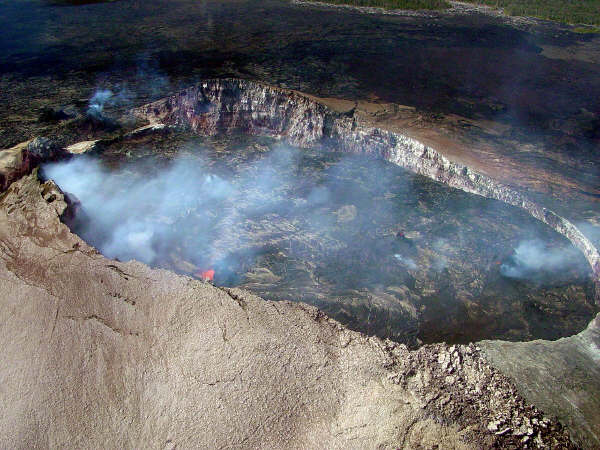
Pu'u 'O'o Crater
Napau Crater Trail - This trail (occassionally called Mauna Ulu Trail) is the only place in the Volcanoes National Park where you can see the Pu’u ‘O’o vent, the heart of the current Kilauea eruption. Hike on lava from the Mauna Ulu eruptions of 1969 through 1974. There are cinder cones, pit craters, and a tree fern rain forest to marvel at as you follow the trail to the edge of Napau Crater. During the hike you can see lava flows, kipuka, lava trees, pit craters, cinder cones, rain forest, birds, and insects. This is a long day hike, if you choose to do the whole thing. This trail starts on an old segment of the Chain of Craters Road. The trail initially brings you to over the recent Mauna Ulu lava flow, and after about 30-45 minutes, up to Pu’u Huluhulu, a heavily forested hill. From this vantage point, you get an awesome view of Mauna Ulu. There are several sheer cliffs and the dry lava ground shifts nearby as you walk over it. You will see steam pluming out of the ground in several spots. Continuing on, you will pass close to the Makaopuhi Crater, Napau Crater, and eventually close to the Pu’u ‘O’o vent. It is 6 2/3 miles just to the Napau Crater, and another 2 miles beyond that to Pu’u ‘O’o, for a total of 17 miles round trip! Check out this online photo journal of the Napau Crater Trail.
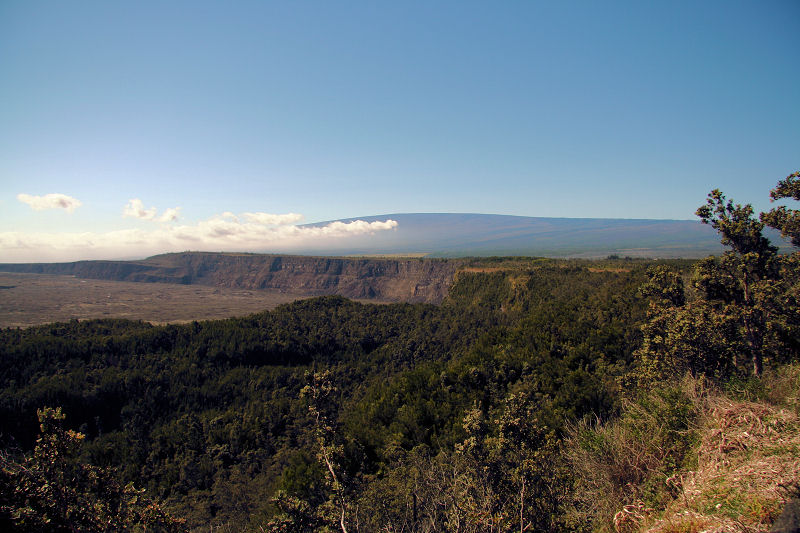
Mauna Loa in background
Mauna Loa Summit Hike - A four-day, 19-mile (30-kilometer) ascent of the Big Island’s second highest peak, Mauna Loa (13,678 feet or 4,169 meters) is a volcanic trekkers holy grail. This trail can see below freezing treacherous conditions, but a hut system shelters trekkers along the way. Contact the rangers at Hawaii Volcanoes National Park for permits (free; www.nps.gov/havo).
Camping - Two drive-in campgrounds are located within Hawaii Volcanoes National Park. These campgrounds are FREE - the only fee that applies is your entry fee to the park. They offer bathrooms, picnic tables, and fire pits. Camping is available on a first-come basis. No reservations, No permits, and No check-in are necessary. Stays are limited to 7 days in a month and not to exceed 30 days per year. Additionally, there are various other camping areas that you must hike to, check in at the Visitor’s Center for more details and the necessary camping permits for these sites. Additionally, there are small cottages for rent at the Namakani Paio campsite. For about $40 per night you can stay in these convenient cottages. Call (808) 985-6011 or go to the Volcano House for more details.
Lodging - You can stay in the historic Volcano House Hotel, or a variety of other hotels close by. Being more than 90-miles away, it is often more convenient to spend the night at a hotel near the Volcano or in Hilo when visiting the Hawaii Volcanoes National Park.