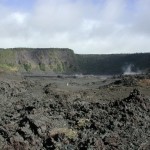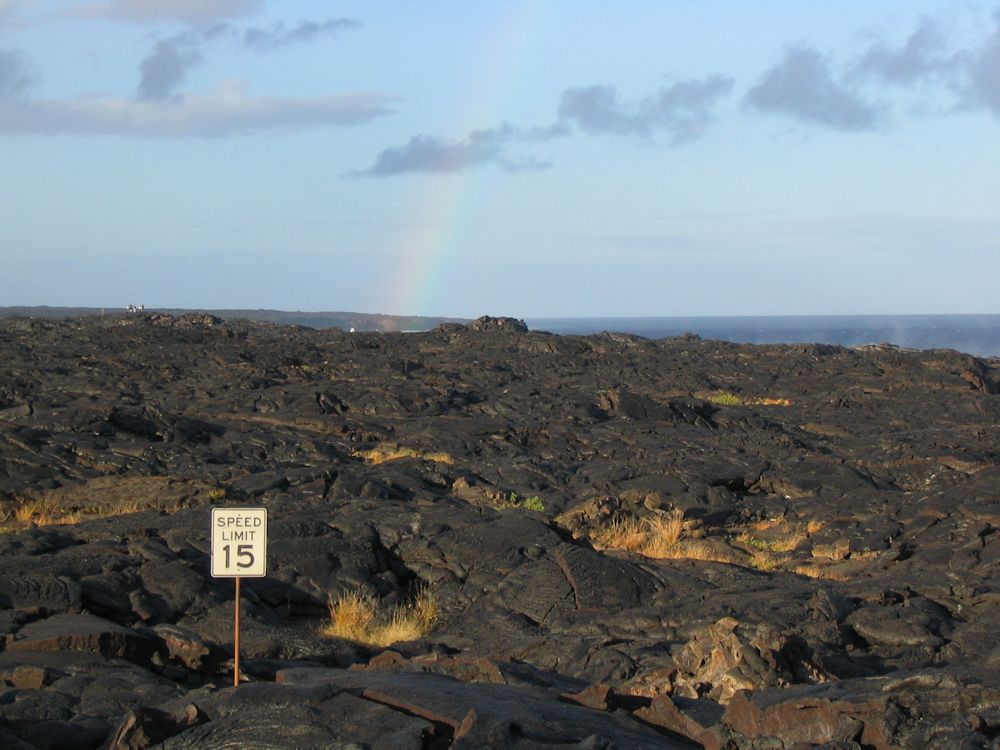
Pahoehoe Lava, Kilauea Volcano, Big Island
It is recommended that you wear comfortable socks and walking shoes or hiking boots. Year-round the weather varies on the volcano, so be prepared for all climates, hot, damp, and cold. Bring sunscreen and wear a hat. We suggest bringing sweatshirts as well as a wind-breaker or raincoat or gore-tex jacket to layer on your clothes. Although there are ample water fountains in the park, we suggest you bring water with you, especially if you will be hiking. Don’t forget your camera! If you plan to view the lava flows after dusk, remember to bring one flashlight per person.
Check the latest Kilauea volcano lava flow update, or call the Park at (808)985-6000. You can also view a map of the most current lava flow.
Hiking to the Active Lava Flow?
Prepare Yourself Well.
1. Wear comfortable shoes and socks - sturdy support or hiking boots are recommended. Do not wear open toed shoes! The terrain is rough and it is easy to twist an ankle.
2. Long pants are preferred - to protect your legs from the sharp dried lava as well as the extremely hot active lava flow.
3. A walking stick provides good support over the rough terrain.
4. Wear a hat and bring sunglasses to protect you from the sun. Also, wear sun block as well.
5. Bring a light jacket or windbreaker - it is very windy and the weather is unpredictable at this location. There may be unexpected rain showers.
6. Bring along a lot of water! Put it in a back pack so that you can hike comfortably.
7. Bring 1 flashlight per person and it is a good idea to bring along spare batteries. The best lava viewing is at night.
8. Bring your camera and enjoy the scene! Check out our lava flow photos and our volcano videos.
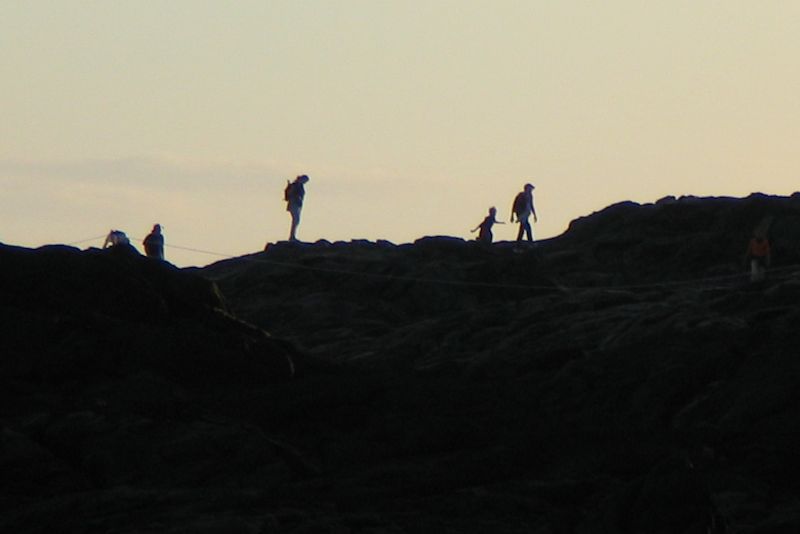
Hiking to the Kilauea Lava Flow
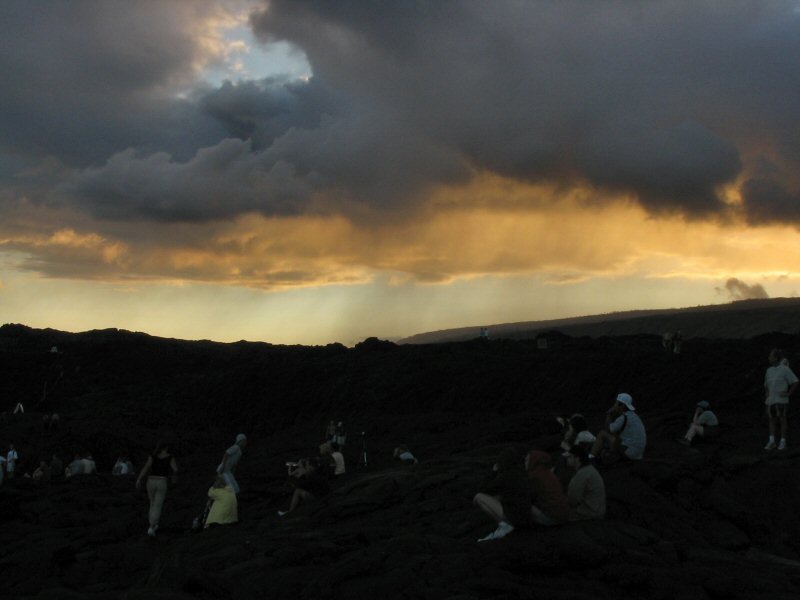
From the Kilauea Visitor Center, follow Crater Rim Drive to the Chain of Craters Road intersection. Drive 20 miles to the turn-around at the end of the Chain of Craters Road and park along the mountain side of the roadway.
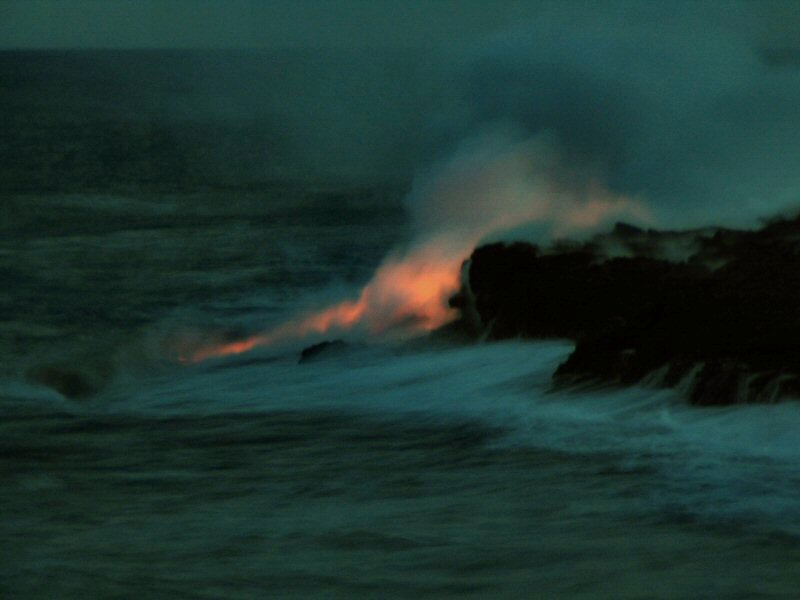
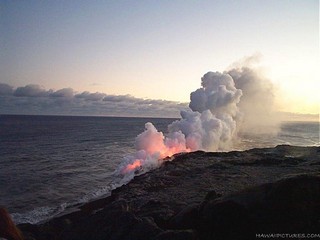
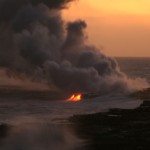
Rangers are on duty at the end of Chain of Craters Road from late morning until evening. Sometimes, lava may be seen in the distance flowing down the mountainside. Often, a red glow may be visible on the slopes after dark. A steam plume is visible when lava enters the ocean; it glows orange and red after sunset.
Kilauea is a dynamic volcano. Lava viewing conditions change daily. Talk to the ranger in the Kilauea Visitor Center when you arrive for current information.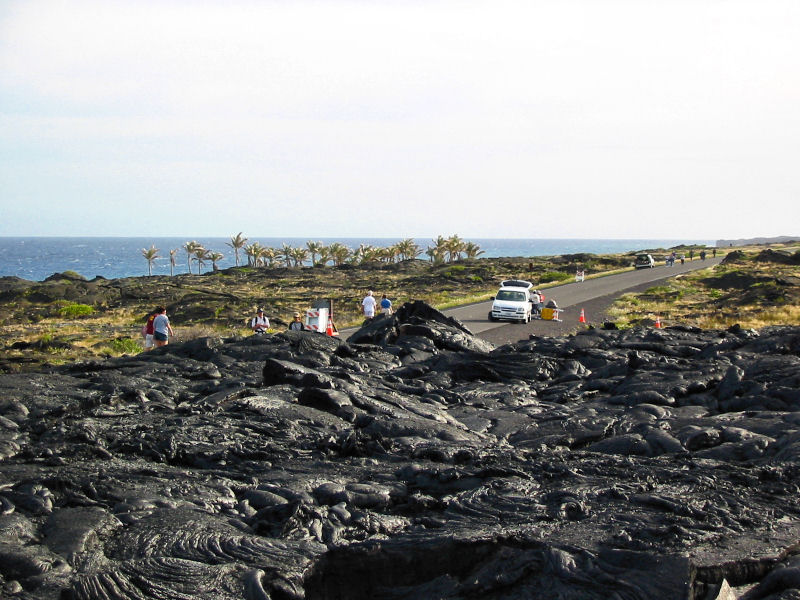
Typically you will find either a water entry - where the lava can be seen as it enters the ocean; or a surface flow - where lava can be seen on the surface of the land in the distance or up close. Calling the Lava Flow
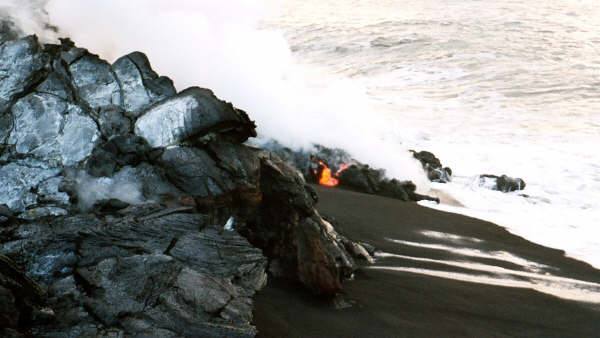 Update will tell you what the Lave flow ocean entrynature of the lava flow is and how far you will have to walk. Either way, this is a chance of a lifetime and well worth the time and the hike.
Volcano Hiking Warnings
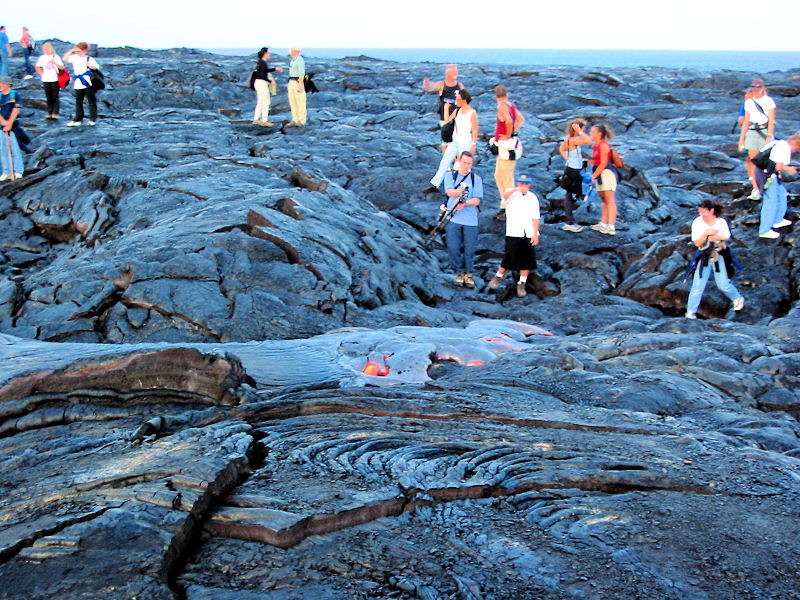 Intense sunlight, wind, humidity, and high temperatures can lead to dehydration, heat exhaustion or stroke. Cold wind and driving rain are possible any time of year and may cause low body temperature (hypothermia). Hot, dry winds blowing over non-native grasses can sap your energy and dehydrate hikers quickly. Pace yourself, drink fluids, eat snacks, and avoid hiking during the hottest times of day (usually mid-day 10 am to 2pm). Wear sunglasses, sunscreen, and a hat. Take layers of clothing to regulate body temperature.
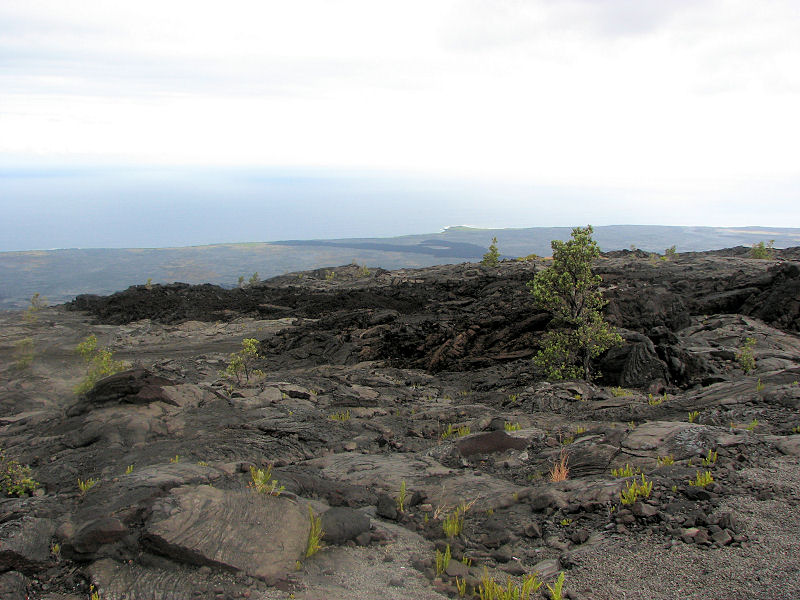 During the day, temperatures can soar into the high 90s or higher. There are NO trees to provide relief from the sun. Carry and drink 3 to 4 quarts of water per person (per day). The elderly, infants, and those taking antihistamines and certain types of medication for high blood pressure or depression are especially at risk for heat exhaustion or heat stroke. The Heat Equation: High Temperature + High Humidity + Physical Work = Heat Illness or Death.
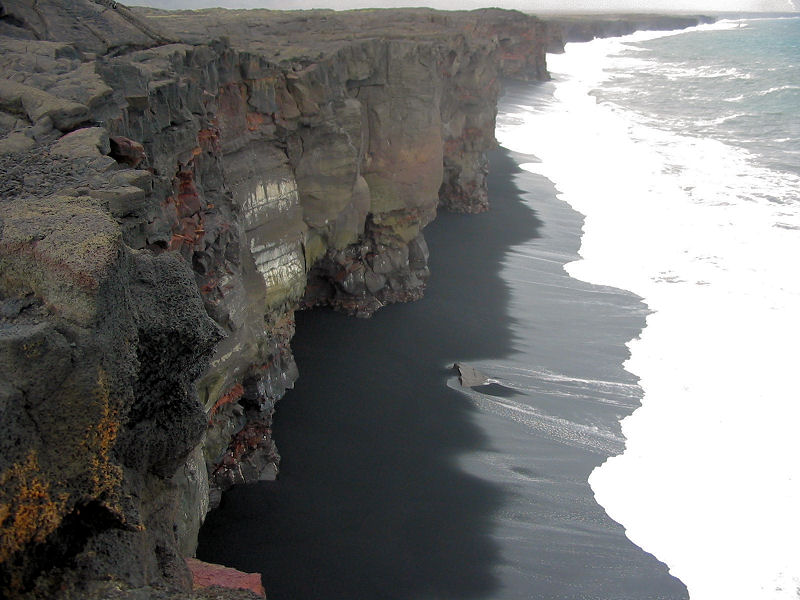 Steep cliffs (pali) mark the flank of Kilauea. Trails may be steep and rocky. Watch your footing along the hot and windy trails. Maximum elevation change