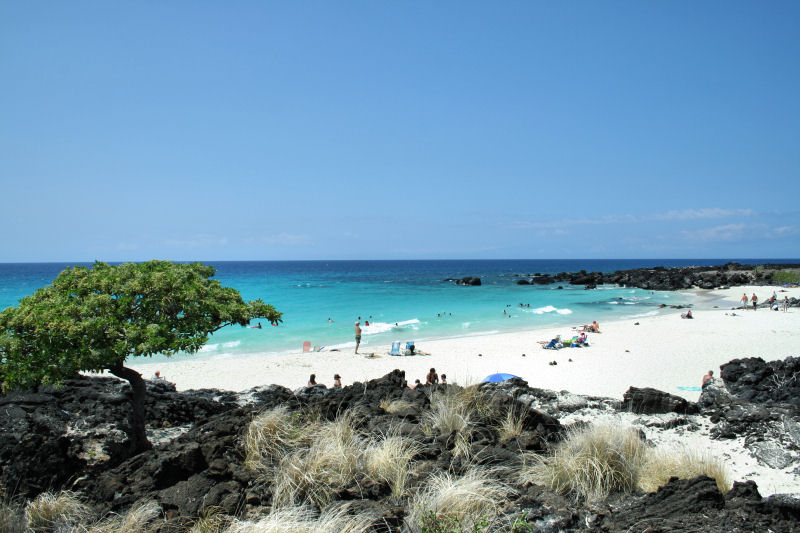
Kua Bay Beach, Kohala Coast
There are a lot of things to think about when planning your next trip to the Big Island of Hawaii. When to Visit and How Long to Stay are frequent questions asked by visitors. The Island of Hawaii is a larger area than all the other Hawaiian Islands combined - and the climate, regions, and activities are incredibly diverse. You can visit a black, white, grey, and even green sand beach; you can stay in a bed and breakfast in the mountains, a lavish resort on the beach, or a comfortable vacation rental downtown. There are a lot of decisions to be made…
When to visit the Big Island
When planning your trip to the Big Island, there are many factors to consider. It is important to know that four large volcanoes divide the island into two halves: the eastern Hilo side which is the windward side of the island, and the western Kona side which is the leeward side of the island. The weather and ocean conditions can be vastly different on each side of the island depending on the time of year. The Big Island is large and diverse, boasting 11 of the world’s 13 climate zones. During the winter, the highs will be around 80° and a low in the 60′s. During the Summer, highs will be in the mid to upper 80′s and a low in the 70′s. The ocean temperature in Hawaii reaches a comfortable 80 degrees in mid summer and drops to the low 70′s in the winter months. Check out the current Big Island Weather.
If you plan to stay on the Kona side of the island for most of your vacation, weather is not really an issue because the mountains block most of the moist air resulting in very little rain throughout the year, some areas getting less than ten inches a year. Your time in Kona will most likely be dominated by sunshine every single day! Hilo on the other hand is one of the wettest places on Earth, routinely getting over 130 inches of rain a year. You can expect March and April to be the rainiest months, and June to be the driest. For details on each region of the Big Island, check out our Big Island Overview article.
Winter is when the sea swells and the waves are at their peak. Surf conditions also means rougher seas for snorkeling and SCUBA diving in Kona during the winter. During the winter months, hump-back whales travel to Hawaiian waters and whale watching is very popular on both sides of the island. Late spring and early fall are out-of-season times when you can find good travel bargains. Airfare and lodging tend to be more expensive during the “high” season of mid-December to mid-April. If you plan to visit during this period, make your reservations early.
Unless you plan to attend the Merrie Monarch Hula Festival, you should avoid the Hilo area of the Big Island during the week after Easter. The Ironman Championship Triathlon in October each year makes the Kailua-Kona area of the Big Island very busy.
Travel Planning Advice
There are several attractions that are not covered in most guidebooks and tourist magazines. Check out our article - the Top 5 Attractions You might Miss on the Big Island.
How Long to Stay
Seeing all of the Big Island in just one day is near impossible! Too many times people will plan a whirl-wind one day tour of the Big Island and be completely overwhelmed. The Big Island is so large that you could very well stay for two weeks and still not see or do everything. The best way to decide on how long to stay is to plan what you will be doing. The Big Island is so large that you do spend a lot of time driving from one place to the next. It takes about 2.5 hours to drive from Kailua-Kona to Hilo. The Hawaii Volcanoes National Park is only about 45 minutes from Hilo, but 2.5 hours from Kailua-Kona. At least three days on the Big Island will allow you: one day at the Volcano; one day at the beach or snorkeling; and one day waterfall viewing, hiking, and sightseeing. A good amount of time to stay is one week. This allows you more time to relax and not feel completely rushed as you travel around the island.How Long to Stay
A lot of people poorly plan their visit to the Volcanoes National Park. This is by far one of the greatest attractions of the Big Island, but too many visitors end up running out of time and missing out on much of the park. If you plan on doing the one day trip from Kona, keep in mind that you will be driving more than five hours round-trip, not including the time you spend in the park. The best way to do this is a very early morning start out of Kona. If you plan on staying late and hiking to watch the active lava flow at night, remember that at the end of all your hiking (sometime after 9:00 PM) you still will have to drive nearly 3 hours back to Kona - it’s doable, but you must prepare for this demanding trip. A better way to plan this adventure is to plan to spend the night at the Volcano or nearby in Hilo, then drive back to Kona the next morning. See our itineraries section for suggested travel itineraries for the Big Island.
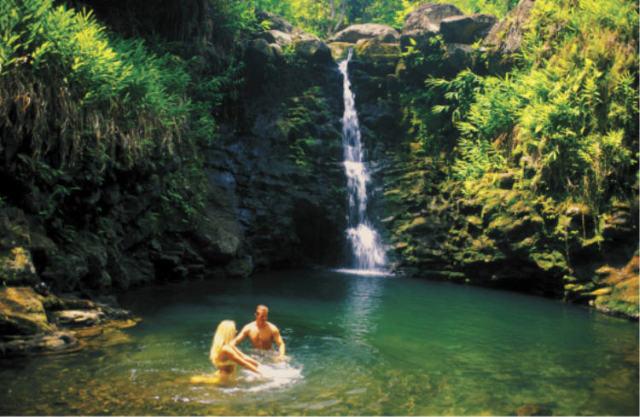
Other than visiting the Volcano, many visitors will spend all their time in Kona and miss out on the Hilo side of the island and all of the wonderful sights and things to do. If you have the time, it is well worth spending time in Hilo town and north of town along the Hamakua coast where steep sea cliffs, canopied rainforest, and waterfalls dominate the scenery. One good way to see the whole island is to drive from Kona to the Volcano, spend the night in Hilo, then drive north up to Waimea and over to the other side of the island back to Kona - basically doing a complete circumnavigation of the island in two days. Check out our Big Island Sightseeing Guide for a list of most of the island’s attractions.
Travel Planning Advice
Budgeting your time when planning your Big Island vacation can be difficult based on time to drive to all the attractions. Check out our handy Big Island Trip Itineraries article that gives you sample itineraries for 1,2 and 7-day trips.
Guide Books
This website is your comprehensive guide to the Big Island with more photos, videos and virtual tours than any other site. However, there is just no substitute for a good guide book; here are some of our favorites. Check out the full selection at our Hawaii Bookstore.
 Frommer’s Exploring Hawaii
You’ll never fall into the tourist traps when you travel with Frommer’s. It’s like having a friend show you around, taking you to the places locals like best. Our expert authors have already gone everywhere you might go-they’ve done the legwork for you, and they’re not afraid to tell it like it is, saving you time and money. No other series offers candid reviews of so many hotels and restaurants in all price ranges.
 Fodor’s Hawaii Guide Book
In this completely up-to-date guide our experts who live in Hawaii give you the inside track, showing you all the things to see and do — from must-see sights to off-the-beaten-path adventures, from shopping to outdoor fun. Fodor’s Hawaii 2006 shows you hundreds of hotel and restaurant choices in all price ranges
 The Big Island Revealed
This is indeed the “ultimate” insider’s guidebook on the Big Island. We travel to the Big Island every year and have had the opportunity to check out most of the the recommended restaurants, destinations, activities and adventures.
Read our next article: Big Island Transportation
Accommodations Articles
Where to Stay - Three different parts of the island to stay - which is best?
Vacation Rentals - Big Island Vacation rentals are a deal
Bargain or 5 Star Hotel - Stay at a resort or a bargain hotel
Discount Big Island Hotels - Check out the latest rates
Travel Planning Articles
Planning your Trip - When to come, how long to stay, books
Vacations for Families - Best family beaches, activities for youngsters, infants, teens
Hawaiian Cruise Passengers - Information about port calls in Hawaii
Sample Travel Itineraries - Suggested itineraries, 1-2 day, 1 week
Island Activities Guide - Guide to the activities & tours
Regions of the Big Island - Geography and climate descriptions
Big Island Transportation - How to get there, plan your driving
Packing for your Trip - Big Island scenery & weather is diverse
Big Island Wedding Planner - How to plan your wedding in Hawaii
Shopping in Hawaii
Big Island Shopping Guide - Guide to the shopping destinations
Hawaii Souvenirs - The best souvenirs to buy in Hawaii
Gear & Equipment Articles
Gear for your Trip - Get outfitted with the right gear
GPS Points of Interest (POI) - GPS Coordinates for Points of Interest