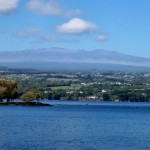
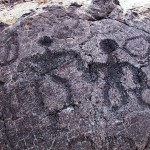
Attractions: scenic drive, ancient Hawaiian carvings
Activities: hiking, petroglyph viewing
Extras: parking lot at the trail head
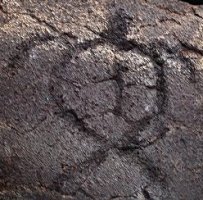
Sea Turtle Petroglyph
Ancient Hawaiians called their stone art k’i’i pohaku, or images in stone. The k’i’i pohaku are petroglyphs, which comes from the greek words, “petros” for rock, and “glyphein” to carve. This rock art provides a unique look into the past, but questions can only be answered by speculation, for there is almost no historic evidence of the petroglyph’s origin in Hawaii. Although the age of Hawaii’s images is not known, a chronology of style can be discerned. The earliest were simple stick figures, while the figures with triangular torsos, which are only found in Hawaii, came later. Others that show carvings of horses and cattle were obviously carved after Westerners appeared in Hawaii. The island of Hawaii has the greatest number of petroglyphs in the state, and areas of concentration are almost always found on the smooth pãhoehoe lava, cliff faces, or smooth interior walls, on the dry and lava inundated areas of the island, and along trails known to the ancient Hawaiians.
Puako Petroplyphs
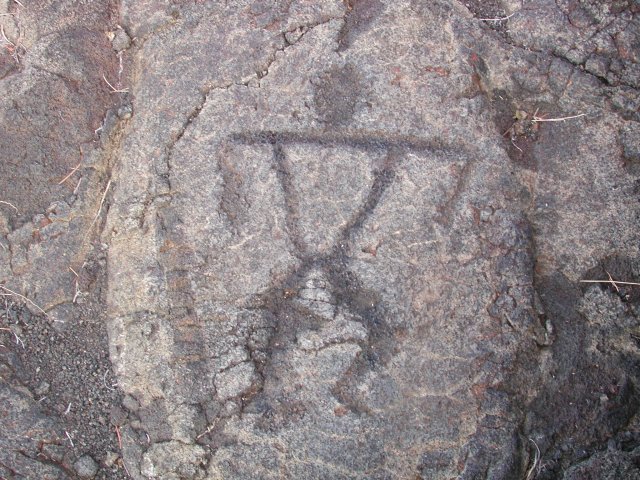
Petroglyph at Volcanoes National Park
An area of large concentration is the Puakõ Petroglyph Archaeological Preserve, located just north of the Mauna Lani Resort. About 1,200 petroglyphs are in the section through which access is allowed. There are also petroglyphs scattered throughout the Mauna Lani Resort. The Muana Lani Hotel has a brochure and map and offers guided tours on the property with a Hawaiian historian. The largest concentration of petroglyphs in the Pacific lies within the 233-acre Puako Petroglyph Archaeological District. The 1 1/2-mile Malama Trail starts north of Mauna Lani Resort; take Highway 19 to the resort turnoff and drive toward the coast on North Kaniku Drive, which ends at a parking lot; the trailhead is marked by a sign and interpretive kiosk. Go in the early morning or late afternoon, when the temperature is cooler. A total of 3,000 designs have been identified, including paddlers, sails, marchers, dancers, and family groups, as well as dog, chicken, turtle, and deity symbols. View map of Mauna Lani Resort Petroglyph trail.
The Royal Waikoloan Hotel at the Waikoloa Resort also has an in-house historian, and maintains a marked trail leading to petroglyphs adjacent to the resort. The King’s Shops offers a complimentary guided tour of the trail every Saturday morning at 8:30 a.m. in front of the Food Pavilion.
Pu’u Loa Petroglyphs
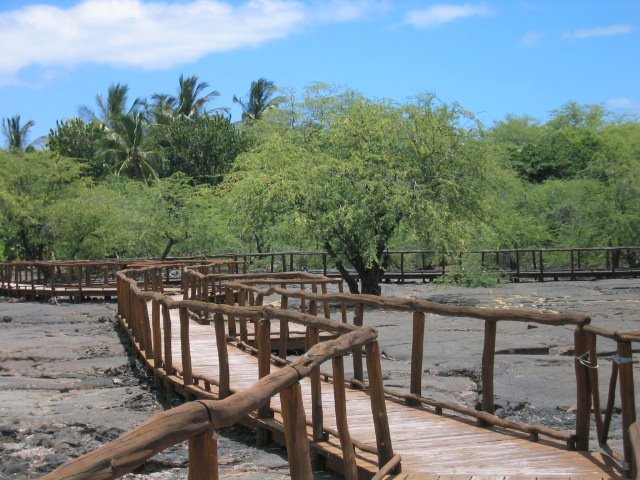 The Puu Loa Petroglyphs, located off the Chain of Craters Road in Hawaii Volcanoes National Park are also worth viewing. This trail is marked on the Park map as well as from the road. It is a short hike from the road to the petroglyphs here. You can stop here prior to your trip to the end of Chain of Craters Road to view the lava flow.
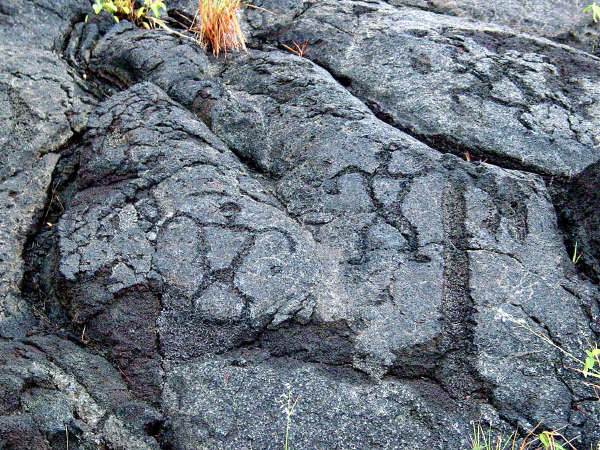 Puu Loa meant ‘Long Hill’, and the Hawaiians interpreted it to mean ‘Long Life’, so for countless generations, fathers came to Puu Loa and placed their newborn’s umbilical cord in small holes scattered about the site, hoping for a long life for their children. Stand quietly here, and listen to the loud silence, and feel the mana of this still very spiritual area.
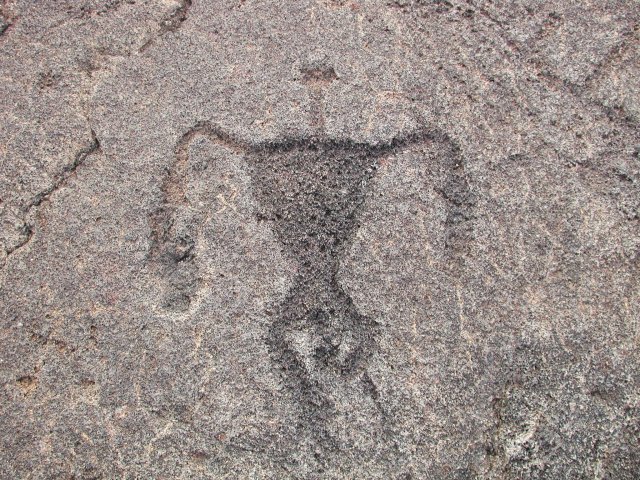 A few words of warning. First, and most importantly, do not step on or attempt to take rubbings from the k’i’i pohaku, as it will slowly wear them down (there is a spot designated for rubbing in the Puakõ preserve). The petroglyphs are important archaeological artifacts, and the artwork was definitely designed to last, so let’s help preserve them for many years longer. Photographs are fine, and turn out best in the slanting shadows of the early morning or late afternoon. Wear sturdy shoes for walking on the unforgiving lava, bring water, and don’t forget the sunscreen!
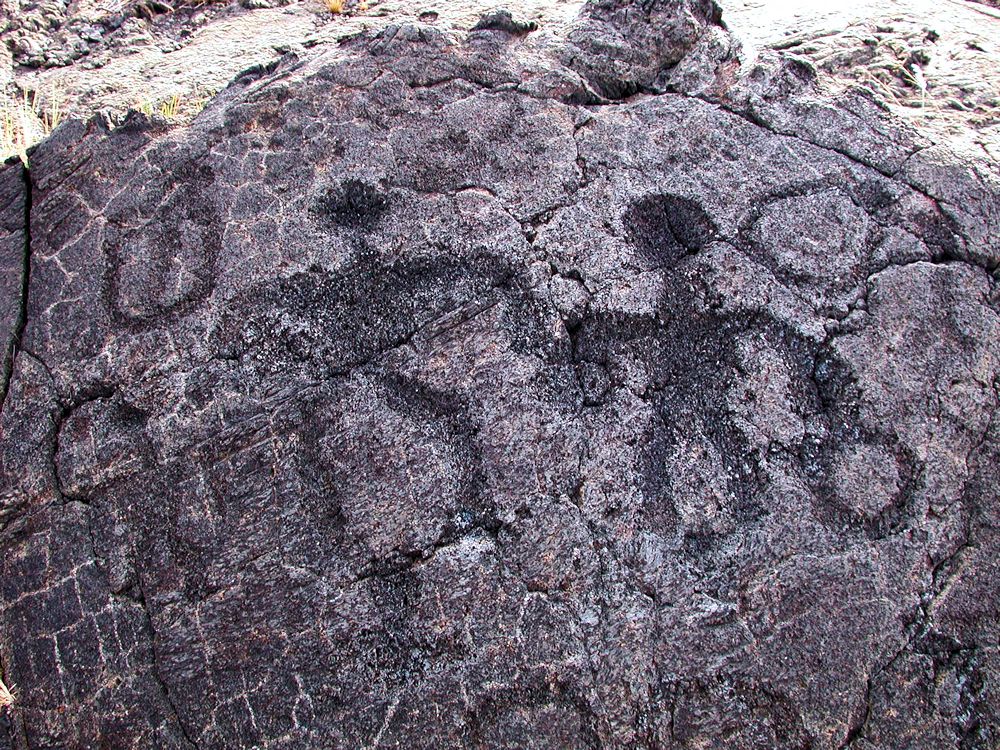
Pu’u Loa Petroglyphs, Volcanoes National Park


No related posts.