Saturday, March 22, 2008

Kilauea Explosion - Portions of Park Closed

There was an explosion at the Halemaumau Crater, Kilauea Volcano, Hawaii Volcanoes National Park on 3/19/2008. Rocks shot from the Wednesday's explosion damaged a wooden fence that visitors used to peer into the crater and created hazards across nearby roads and paths.


Areas in the park that are shut because of explosive debris or high sulfur dioxide levels are:
• Crater Rim Drive between Kilauea Military Campsouth/southeast to Chain of Craters Road.
• Crater Rim Trail from Jaggar Museum parking lot south/southeast to Chain of Craters Road.
• All trails leading to Halema`uma`u crater are closed including those from Byron Ledge, 'Iliahi (Sandalwood) Trail, and Ka'u Desert Trail.
Rocks shot from the explosion damaged a wooden fence that visitors used to peer into the crater and created hazards across nearby roads and paths.


Excerpt from USA Today:

By Dave Dondoneau and Dan Nakaso, The Honolulu Advertiser
HONOLULU — Plumes of smoke billowed out of Kilauea volcano Thursday, and visitors were kept at least a mile away from the scene of the volcano's first explosion in 84 years.

Scientists who monitor instruments measuring activity at Kilauea volcano were surprised by the explosion that occurred at 2:58 a.m. Wednesday. The blast scattered boulders and smaller rocks over 75 acres of Hawaii Volcanoes National Park on the Big Island of Hawaii, said Steve Brantley, deputy scientist in charge of the U.S. Geological Survey's Hawaiian Volcano Observatory.
COMPLETE COVERAGE: Honolulu Advertiser

Scientists do not know whether — or when — a similar explosion will occur, Brantley said. There were no reported injuries, but falling rocks — including a boulder about 3½ feet in diameter — damaged the popular Halemaumau lookout and its parking lot. Rubble was scattered along Crater Rim Drive, the road that visitors use to drive through the park, Brantley said.
The explosion at Halemaumau crater was the first since 1924.

"There have not been any additional explosions since the one early Wednesday morning," Brantley said.

Scientists at the Hawaiian Volcano Observatory did not know what to expect in the coming days or weeks.

"It's very exciting for all of us," said Jim Gale, chief of interpretation at the observatory. "It's such a change from the overall activity I've seen in my seven years here.

"We're exploring new worlds," said Jim Kauahikaua, scientist-in-charge at the observatory. "The recent explosive event represents a significant addition and change to Kilauea volcano's ongoing activity, and the Hawaiian Volcano Observatory is using every means available to study its causes and consequences."

Gale said most of the park remains safe and open, but 1 mile of Crater Rim Drive was closed from Kilauea Military Camp to Jaggar Museum as a precaution.

Sulfur dioxide levels have been on the rise at Kilauea since December, Gale said. "There's enough sulfur dioxide being put out at the Kilauea summit right now to fill 150 Goodyear blimps a day," he added. "It is a concern."

The sulfur dioxide gasses pose a health risk, especially to people who suffer from asthma and chronic coughing, observatory geochemist Jeff Sutton said.

Fire and police authorities made emergency plans to evacuate nearby villages if the winds blew toxic gasses in their direction, said Duane Hosaka at Hawaii County Civil Defense. The volcano's gas emissions have moved toward the sea, rather than over populated areas.

One mile outside of Hawaii Volcanoes National Park, a handful of visitors canceled reservations at the 14-room Kilauea Lodge and Restaurant after inaccurate rumors spread that the park service was evacuating people after the explosion, said Janet Coney, the lodge's office manager. "They're not evacuating," Coney said.

"To me, there's a lot of excitement," she said. "I hope the mountain doesn't go. But with Mother Nature, you never know what could happen. You have to take one day at a time."

Sunday, March 9, 2008

Visitors Up Close with Kilauea Lava Flow

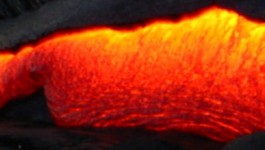
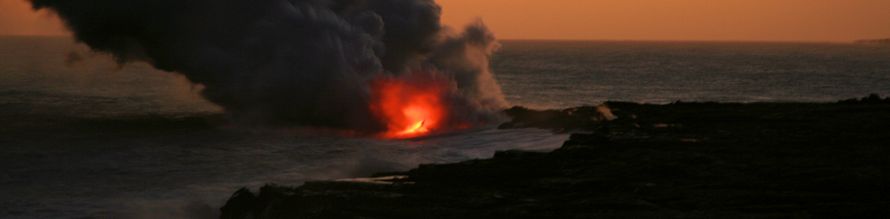
The saga of the Kilauea Volcano lava flow continues. Last year, the lava flow changed direction, flowing further east and through more remote areas - unfortunately preventing the general public from viewing the geological phenomenon. Since then, the lava flow threatened the edge of a few austere housing communities, but for the most part remained hidden from public view. But, in the last several days, the dynamic conditions changed yet again as the lava flow made a turn and presented a wonderful opportunity for tourists and locals alike to view the active lava flow's ocean entry - where the rivers of lava flow into the ocean resulting in plumes of steam, hissing of super-hot lava mixing with the roaring ocean waves.

Excerpt from KGMB Channel 9:

For some it was a once in a lifetime event, seeing lava flow into the Pacific Ocean from the Kilauea volcano. Saturday was the first time, visitors could legally get this close to the spectacular view. Big Island County opened a new viewing area or the public, and its just a quarter mile away from where the lava hits the sea.

Excerpt from KPUA AM670:

Viewing area to see lava flow opens
By Associated Press
HONOLULU (AP) _ A viewing area allowing people to see lava from Kilauea volcano flow into the water has opened. The site is accessible by a half-mile pedestrian trail and is a little more than a quarter mile from where the lava meets the sea. Officials expect hundreds of people to visit the site, which is the first way to legally see lava from the ground or watch it enter the sea since last June. State, county and federal officials say they will meet each morning to decide whether the lava flows threaten visitors and need to close the viewing area. Civil defense officials say they will have security at the site to prevent people from going there after hours. The site is open from 2 to 10 p.m.

This was the best re-cap of of how to view the latest lava flow:
Excerpt from the Honolulu Advertiser (3/7/08)

HILO, Hawai'i — Lava completed its trip down the slopes of Kilauea volcano and has begun flowing into the ocean, and Big Island officials braced for an expected surge of people visiting the remote Puna coastline to see Madame Pele's handiwork.

The area around the lava flow is still closed to the public, but state and county crews are expected to finish improving about two miles of rough access road today to provide a safe route to trails and observation points where spectators can see the lava.

A blessing and opening of the improved road and turnaround point are scheduled for tomorrow at 2 p.m., according to Big Island Mayor Harry Kim.

After inspecting the scene yesterday morning, Kim told his staff the latest flow offers a fascinating opportunity for visitors to view lava, but also poses risks.

The area has little or no cell phone service, almost no facilities and it will be easy for newcomers to become disoriented as they hike to get closer to the ocean entry, Kim said.

The visitor turnaround is being built in a forested area that was bypassed by previous flows, and another risk is that new fingers of lava could extend from a flow upslope of the access road and enter the old-growth area, starting fires and causing methane explosions as the lava reaches the vegetation, said Jim Kauahikaua, scientist-in-charge of the Hawaiian Volcanoes Observatory.

"There is a certainty of more fingers," and scientists will closely monitor the widening flow activity mauka of the improved road, Kauahikaua said. "It's expanding, so it will go east and west."

The lava began entering the ocean late Wednesday or early yesterday morning.

Kauahikaua said the pahoehoe flow is rapidly coating a bench extending off the coast, and is blasting steam into the air as it touches the seawater. He said there is a good chance a second finger of lava will continue downslope and by Saturday also will reach the ocean.

"It's really quite a spectacular sight, a lot of lava going into the ocean," he said.

ACROSS ROYAL GARDENS

The lava flow's passage through the Royal Gardens subdivision prompted Civil Defense to evacuate about five people from the area Monday as the flow threatened to sever an access road that the county built for lava viewing in 2001.

That road was cut Tuesday evening, and now state and county crews are working on a new turnaround further east to allow people to get close to the lava viewing area.

The flow passing through Royal Gardens offers the most accessible lava viewing opportunities from the ground in many months, and county officials expect 1,000 or more visitors a day will head for the new viewing site once it is opened.

Ted Miller, construction and maintenance superintendent for the state Department of Transportation's Highway Division on the Big Island, estimated the improvements are costing the state about $100,000.

More than a dozen state workers were operating graders, backhoes and other equipment to prepare the access road, which is made up of remnants of the old two-lane Highway 130 that was severed repeatedly by lava. The highway remnants are connected by narrow passages cut through lava that covered the highway.

The crews are improving the two-mile route, and adding a turnaround that will double as a helicopter landing area in emergencies, Miller said. Cars can park on the shoulder of the paved stretch, he said.

Traffic may be slow because the links between the paved areas are only one lane wide, forcing motorists to pull over to let one another pass, he said.

MAKING PEOPLE 'HAPPY'

The county in 2001 charged a toll for people who used a similar access road to get to the flow, and Kim said he may impose a similar charge again to recoup the cost of roadwork. Initially, however, there will be no charge to use the road, which will be open from 2 to 10 p.m.

"I think Madame Pele has given us a tremendous opportunity to admire her creation," Kim said.

"Even if this stops one day after it started, we're going to make a few hundred or a few thousand people happy," Kim said. "We're going to make a lot of people experience things that they've never even dreamt about."

Gov. Linda Lingle is expected to survey the flow tomorrow morning from a Hawai'i National Guard helicopter.

Labels: , ,

Monday, February 18, 2008

Visiting the Big Island Without a Car

Recently, friends of mine visited the Big Island of Hawaii. Naturally, I tried to help them plan their vacation - I offered tips on where to go, what hotel to stay at, and overall tried to steer them towards the http://www.letsgo-hawaii.com/ website for all of their vacation planning needs.

Unfortunately, I must have forgotten to mention that they would need a rental car (but, who goes on vacation without renting a car?)... Well, these friends arrived at Kona Keahole Airport without any plans for a car and then simply took a (very expensive) taxi to their hotel in Kailua-Kona town and began their vacation. Later on I did find out why they did this -- although they had never been to the Big Island, they had previously visited Oahu many times and were impressed with the robust public transportation system that exists there (namely the public bus) -- they thought the Big Island 1.) was smaller with attractions closer together and 2.) there was good public transportation. Wrong on both counts.

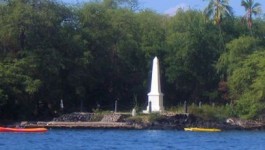
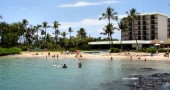
So, for the first several days all they did was venture a short walking distance from the Royal Kona Resort hotel on Alii Drive -- never even making it to the Kohala area beaches or Kahaluu Beach Park, or Captain Cook or South Kona -- because they did not have a vehicle. They remarked to me later, "There are no beaches on the Big Island!" - and I thought to myself, what a strange thing to say (until I realized they never even made it to the beach!) Eventually, for the last few days of their trip, they rented a car and drove to the Volcanoes National Park, Hilo, and then up the Hamakua Coast and back up over to Kona - probably the best part of their trip.

So, the moral of the story is - RENT A CAR on the Big Island. There is so much more to do and see and everything is so spread out compared to the other (smaller) islands. Rent a car (and pack some comfortable walking shoes) and you will be able to access all of the islands splendid attractions.

Labels:

Thursday, February 7, 2008

Backcountry Hiking Plans

My brother and I have laid out some plans to do some backcountry overnight hiking on the Big Island sometime in the next several months. I have wanted to hike deep beyond the Pololu Valley, past the Honokane Nui and beyond. I previously read a blog (that I can no longer find online) that described a wonderful hike many valleys beyond the Pololu, venturing over steep ridges, passing rain-soaked valleys, and far from the casual hiker or passer-by. I've been pouring over a 1:24K topo map of the area and see several marked trails - but I have no idea what the actual condition of those trails actually is. I would like to make this trip an over-nighter, so that we don't have to rush back in the dark -- however I also do not know where an appropriate (or even legal) campsite may be... I'll post more information when we have more figured out.

Our second option is to hike down into the Waipio Valley, across the mouth of the valley, up the intimidating"zig-zag trail" (a.k.a. Muliwai Trail) up and over the staggering ridge, eventually into the scenic and peaceful Waimanu Valley. This valley has been more frequented by hikers and campers - and there are plenty of blogs and online photos of the Waimanu. I think it would be a challenging hike and a very pretty spot to camp out.

Our third option is to hike the Napau Crater trail at the Volcanoes National Park. This is a long hike - with a small campsite located enroute to the spectacular views of Pu'u O'o Crater. I took a look at the trail head and the information published at the Volcano Visitor's Center as well as online trqavelogues -- this looks to be a very interesting, challenging hike. There are several high-terrain points along the route with sweeping views of Napau Crater and other depressions. The grand finale is Pu'i O'o - which I heard is wonderful viewed from here at night. No doubt there would be few if any other persons encountered on this hike. Park rules state that you must register at the Visitor's Center before commencing this hike.

The last hike proposed was enthusiastically brought up by my brother who is looking for a herculean challenge: hike to the summit of Mauna Loa. This looks to be the mother of all hikes on the Big Island - something we would need the right gear and the right conditioning before we attempted this. And I heard it can be brutal -- the rate of altitude change is such that altitude sickness (adema) is felt by many that attempt this hike.

We will be taking a look at all of these options and planning which hikes we will be doing. I have already begun accumulating the gear that I will need for any of these hikes. I recently bought a new pair of hiking boots -- the sturdy and very supportive Asolo 95Ns, as well as a full set of rain outerwear (top and pants), water purifier + tablets to tackle even the tiniest Leptosperosis particles, and I plan on finally getting a good set of trekking poles (something from Black Diamond). We'll keep you all informed of our upcoming backcountry hiking and hope to post several entries as well as photos of the trip itself.

Labels:

Saturday, January 12, 2008

Lava Flow Moves Towards Subdivision

Below are news excerpts from Big Island lava flow updates.

Summary: Kilauea's lava flow on the Big Island of Hawaii changed direction in the fall of 2007, shifting towards the south east of its previous track. Instead of the southerly flow from the Pu'u O'o vent with some surface flows and a dominant ocean entry, the lava flow shifted east of Pu'u O'o in the direction of the nearly abandoned Royal Gardens Subdivision. The lava was in a virtual stalemate until 1/11/08 when it began to flow in a "threatening" manner directly towards that subdivision. When a long, relatively fast lava flow headed toward Royal Gardens subdivision on Jan 11th, a radio announcement by Hawaii County Civil Defense called it a "threat."

1/12/08 Update
A lava flow on the Big Island has stalled about one-half mile from a mostly abandoned subdivision. But it still threatens one remaining resident. The lava pouring from Kilauea Volcano was expected to reach the Royal Gardens subdivision late Thursday night or early yesterday. According to the U.S. Geological Survey's Hawaiian Volcano Observatory the flow now threatens only the upper part of the subdivision, which has one permanent resident. The observatory's Web site says Hawaii County Civil Defense is dealing with the threat. Over the years, lava from the eruption that began in 1983 has inundated the subdivision, which originally had more than 1,800 lots. [source - KUA.net]

1/11/08 Update
Lava broke out of a holding pattern on Kilauea's East Rift and headed downslope yesterday toward the only two inhabited houses anywhere around, three miles to the southeast in Royal Gardens.

The only two people living in the remnants of the subdivision overrun by lava many times before, two bachelors, shrugged it off.

"I'll get worried when I feel the heat," said bed-and-breakfast owner Jack Thompson.
Dean Schneider, who lives a half-mile away in the sprawling, mostly abandoned subdivision, declined an offer of help from a Hawaii County Fire Department helicopter.
Geologist Tim Orr said the lava could follow a natural contour and miss both houses.

Read the full Honolulu Bulletin article here.

Labels:

Friday, September 28, 2007

Big Island Lava Flow Threatens Homes

Excerpt from Honolulu Advertiser newspaper:

Lava flows advance, Hot rock moves amid forest

Far from the public eye, lava from Kilauea Volcano continued its creep toward civilization yesterday.

The eruption that began July 21 is supplying lava to a channel now almost a mile long on the northeast flank of the volcano, scientists with the U.S. Geological Survey reported.
From the end of the channel, one flow of chunky aa lava has extended another mile and a half, while a second aa flow is advancing farther to the south, the USGS said on its Hawaiian Volcano Observatory Web site.

Scientists are watching for the flows to turn to smoother and faster-moving pahoehoe, which could signal a more imminent hazard to communities in the Puna district.

The flows, now in the Wao Kele o Puna rain forest, are heading downhill in the general direction of Kaohe Homesteads, Leilani Estates and Highway 130 but are at least seven miles away.

The observatory's summary for hazards warns that although there are no immediate threats, "vent areas and lava channels are hazardous and conditions can change rapidly."

Big Island authorities briefed Gov. Linda Lingle last week on the lava activity and now are focusing on keeping Puna residents alert to any potentially dangerous changes.

Article: http://starbulletin.com/2007/09/24/news/story02.html

Wednesday, August 29, 2007

Aloha Festivals Royal Courts Investiture

The Aloha Festivals Royal Court Investiture (Ka Ho'ola'a O Na Ali'i) was held on on Aug. 25 2007, at high noon at Halema`uma`u Crater, believed by some native Hawaiians to be the home of Pele. The Ali`i (royal monarchs) will be adorned with their reigning symbols of royalty to the sounds and sights of ceremonial chants and hula. This festival is held on the last Saturday in August every year at the Halema`uma`u Crater in the Hawaii Volcanoes National Park.

Below are some photos of the ceremony including the arrival of the Royal Court, traditional hula dancing, historical re-enactment, and the playing of ceremonial musical instruments.

Labels: ,